
Teaching Jane Eyre in the 21st Century

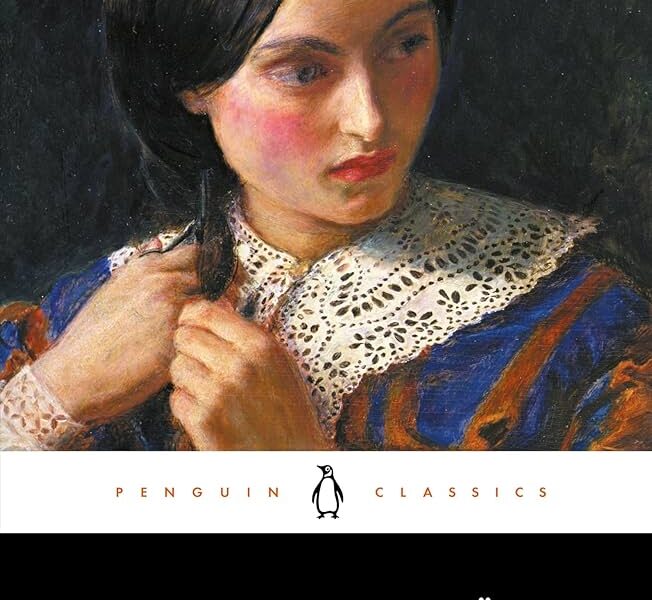
How Should We Teach Jane Eyre? This question arose at the start of this year in my English class. The moment my teacher announced that the next book we would be reading was Jane Eyre, audible groans could be heard throughout the classroom. All year, we freshmen had heard of the bane that was this 300+ page bildungsroman (a literary work that follows a character through their physical and mental development.) The next couple of weeks only reinforced this sentiment; they were among the slowest English classes I had ever been part of. The book’s slow pace and what felt like hypocrisy in its teaching left me with a deep apprehension for the novel and a question I couldn’t shake: Are we teaching this book the right way?
Building on these classroom experiences, I am writing this article to argue that our current approach to teaching Jane Eyre is deeply flawed. The novel is routinely presented as a straightforward feminist triumph, while key issues stemming from Jane, the protagonist, experiencing constant subjugation, the presence of sexist assumptions, and the lack of real improvement in her life go largely unaddressed. This does a disservice to both students and to the novel itself.
To set the stage, Jane Eyre is a novel set in pre-Victorian England that follows its protagonist through her journey to adulthood. It is considered one of the first pieces of feminist literature and is taught in many schools worldwide. While it is often described as the journey of a powerless girl into a wealthy woman who breaks free from social norms, I believe this interpretation is misleading. The novel raises two distinct problems that deserve to be treated separately: first, the moral picture it paints of women’s independence; and second, the way it is taught in schools, which tends to obscure rather than confront those moral questions.
That is not to say the novel has no feminist merit. The book empowers Jane at first. The first chapters of Jane Eyre are genuinely its best. Jane resists her tyrannical cousin, defends herself, and chastises her aunt without apology. Here, she is the rebel we want to see independent, unintimidated, and unwilling to accept the diminished role society has assigned her. The book’s history and its author, Charlotte Brontë, confirm its value in supporting equal rights. In the context of Victorian England, where women had almost no legal or social autonomy, a character like early Jane was nothing short of radical, and that should be acknowledged.
The problem, however, is that the daring character slowly disappears. As the story progresses, Jane is disciplined and belittled by her employer, and she becomes increasingly dependent on a much older man. By the novel’s end, even after inheriting a fortune from her uncle, a moment that should mark her true independence, she returns to and marries Rochester, a man with a deeply troubling history: he imprisoned his wife, faked an engagement to provoke a confession, and, if not for his brother-in-law’s intervention, would have been married to two people at once. The fact that Jane’s financial independence arrives as a gift from a male relative, rather than as something she earns herself, only reinforces the idea that her success was never truly her own.
This shift was brushed off by my school’s curriculum. My teacher continued to discuss the literary characteristics of the book: foreshadowing, properties of a Gothic novel, symbolism, but glossed over how the story had quietly moved away from portraying Jane as a strong, independent character. Despite Jane’s growing oppression and dependence on men, my teacher insisted that the novel sent a message of resisting societal norms. Throughout the class, it was repeatedly emphasized that the book was still feminist. Yet the book seemed, increasingly, to reinforce the very idea it was supposed to challenge: that women needed men to survive. Even when doing the characterizations of Jane’s closest relations, it wasn’t highlighted how major players in Jane’s life had constantly tried to push her into line, and even those who didn’t often undermined who she was as a person.
These issues that I had with these lessons led me to imagine a better way to teach it. Perhaps other English classes teach the book differently, but I think at least some of these points will still apply to other schools. I strongly believe that curricula need to place far more emphasis on how Jane Eyre fails to support feminism in a modern context. A better classroom discussion would hold both truths at once, honoring the novel’s radical origins while honestly interrogating the biases embedded in its conclusion. That means asking students not just what the book says, but what it assumes; not just what Jane does, but what she is ultimately permitted to do. We should be able to understand the context in which Jane Eyre was written while also identifying and interrogating the biases present in the book. Teaching it as a book that immediately supports feminism today, without that critical lens, helps neither the student nor the book.
Despite all these things, I think the idea behind Jane Eyre was great. Writing such a piece in Victorian England took courage and a will for change; however, the way we teach should change with modern times. Jane Eyre is a classic that shows concrete literary principles, but like all good things, it has flaws that we should address and understand. All in all, I do think that we should continue reading Jane Eyre, because it’s a landmark of literature. However, as we change, so should the way we teach the book.
Works Cited
Magnificat, and Audrey Clement. ““Contradiction in Jane Eyre: Conversations of 19th Century Feminism.”” Marymount University, April 2022, https://marymount.edu/academics/college-of-sciences-and-humanities/school-of-interdisciplinary-studies/student-publications/magnificat-2022/contradiction-in-jane-eyre/#gsc.tab=0. Accessed 5 May 2026.
Murry, E.J. “I Am No Bird: Sexism in Literature and Reconsidering the Canon.” 15 June 2024, https://bossymag.com/2024/06/15/i-am-no-bird-sexism-in-literature-and-reconsidering-the-canon/. Accessed 5 May 2026.