
Autism’s Image Change in The Past 70 Years

“Psychotic reactions in children.” In 1952, this is how people you interact with daily were classified in the DSM. Per Psychiatry.org, the DSM has been the guidebook used in the U.S. for nearly 75 years, containing definitions, criteria, and symptoms for diagnosing mental health conditions. Most doctors in the psychological field spend, on average, ten years studying and learning every part of this manual in hopes of changing someone’s life. Seventy years ago, there were only 106 mental disorders in the DSM-I, but now, there are roughly 300 in the DSM-V. This expansion not only added new diagnoses but also broadened criteria and symptoms that allow certain conditions like Autism to finally be fully recognized.
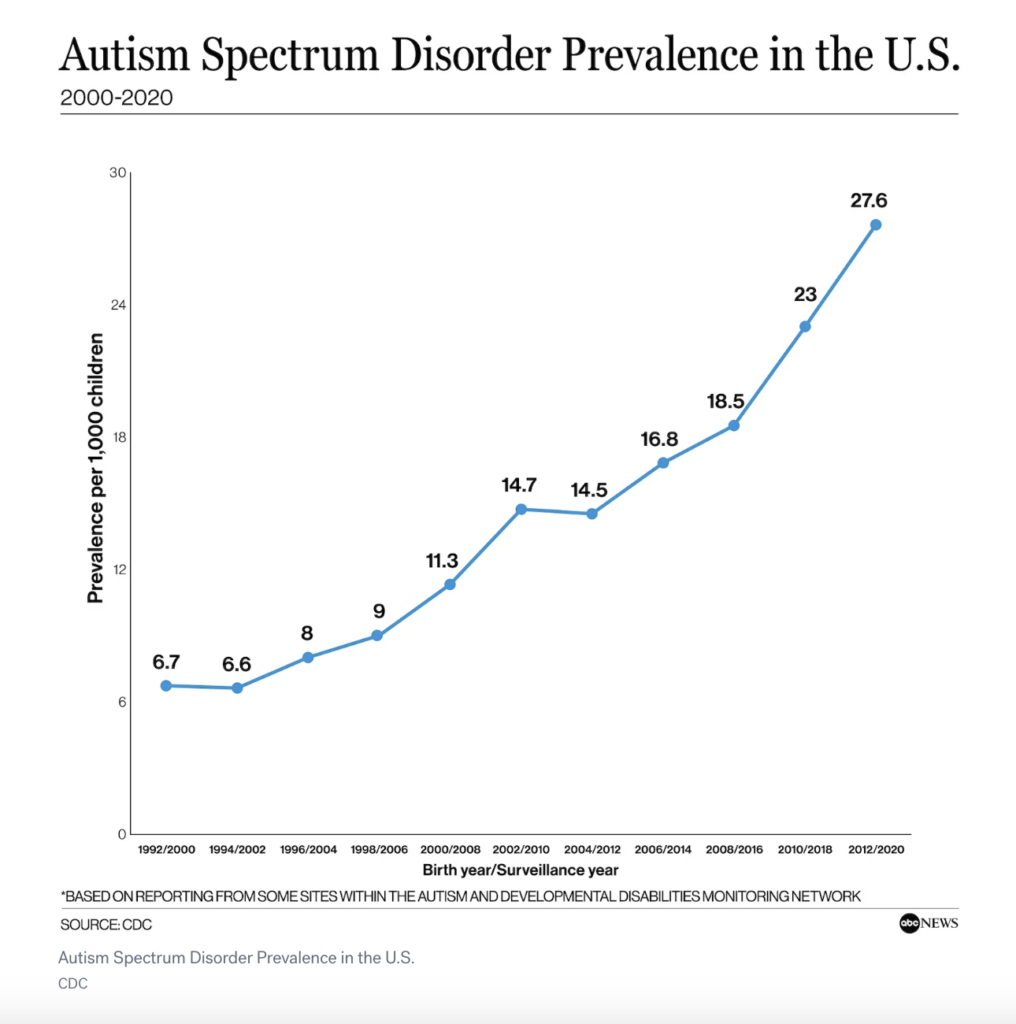
Today, there are many theories on how and why Autism diagnoses are in such a rapid rise. Politicians and the government claim that medications like Tylenol or vaccines could be causing the Autism spike, as said in ABC News. Truly, this rise is because awareness has greatly increased since it was first diagnosed over seventy years ago.
Before Autism was officially labeled as an individual disorder in the DSM-III, Autism was only mentioned once in each of the DSM copies. In those, they labeled Autism as a branch of Schizophrenia, calling it “Schizophrenic reaction, childhood type” in the DSM-I and “Schizoid personality” in the DSM-II. They finally stated that “there is apparently no increased incidence of Schizophrenia in the families of children with Infantile Autism, which supports the hypothesis that the two disorders are unrelated” in the DSM-III. Although recognition finally started being given after nearly two decades of the DSM, the DSM-III still made diagnostic requirements strict, meaning those with different types or lower needs did not receive the diagnosis they deserved.
In 1994, the DSM-IV was released and characterized Autism as a spectrum and broadened the criteria for diagnoses and what needs to be met to receive a diagnosis. When the DSM-V was published in 2013, genetic and environmental factors were introduced to Autism, explaining that Autism is present at birth. The DSM-V also says that “girls without accompanying intellectual impairments or language delay may go unrecognized” and that this could be because of “subtler manifestation of social and communication difficulties” and society’s view of females and Autism. A new addition to the DSM in its fifth edition was levels of assistance. Level one being that an Autistic person is mainly independent yet still struggles in certain areas and requires mild support. Meanwhile, a person with Autism level three typically requires more support frequently and has more severe symptoms. These levels allow others to understand and support an Autistic individual better without generalizing the disorder.
All these subtle but important changes throughout the years have pushed out Autism awareness and helped shape the truth of Autistic individuals. Without these changes, people like me and others in my family would’ve not gotten the support we require due to masking which is put upon us by society. Autism is not caused by anything after birth, even if development is “normal” for the first few years of life. Those with Autistic siblings or parents have a much higher chance of being Autistic than the general population. Diagnosing doctors can also keep culture and gender related diagnostic issues in mind after its additions in the DSM, allowing everyone to be fairly diagnosed and supported. From 1952 to now, a lot has changed in how Autism is portrayed in society. The sixth DSM is expected to be released within the next four years and there will likely be even more changes to not only Autism but also other misunderstood disorders. New findings are always being discovered in the psychological field, meaning Autism awareness will keep increasing so the future can be even more accessible. Although there are still societal problems and pressures, Autism is now being recognized more due to changes in the DSM.


Other Articles
Secondhand Retail – What’s the appeal?