
Two Corridors, Two Futures: Northeastern US vs. Beijing-Shanghai

The most economically productive corridor on the planet, the 457-mile, 7-hour train ride on the North East Corridor rail line (NEC) from Boston to DC, contains 53 million people, nearly 17% of the nation’s population, 5% of the globe’s GDP (gross domestic product), equivalent the entire German economy, the 3rd largest on the globe. You’d think the richest city corridor would be the most developed, connected, and integrated part of the globe. You’d think wrong.
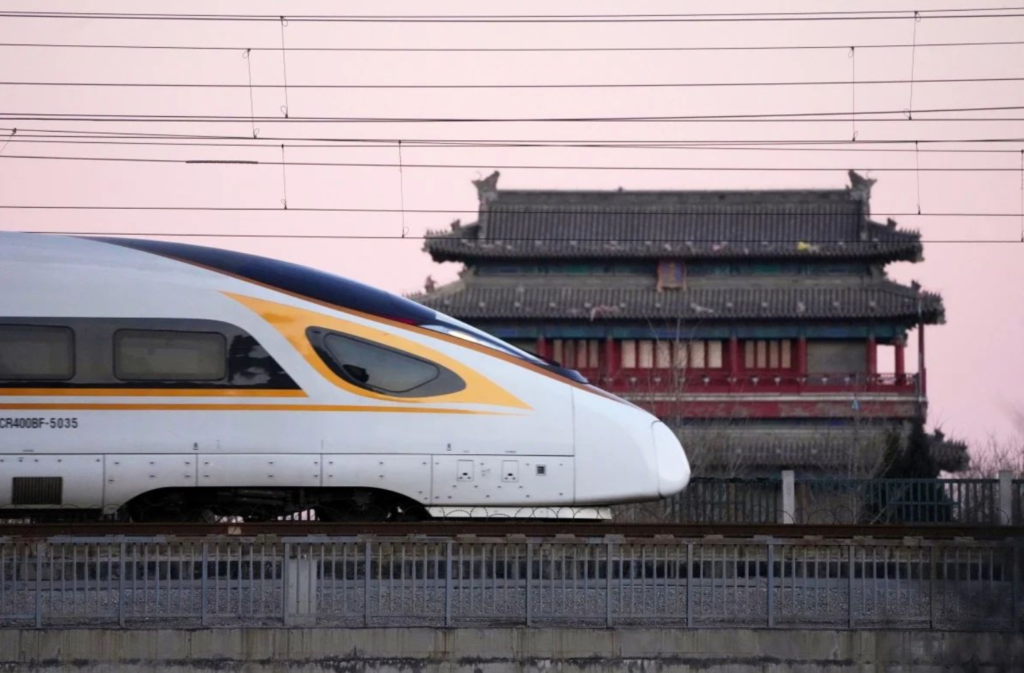
Beijing to Shanghai corridor, stretching 819 miles, connecting a colossal quarter billion people, with similarly colossal global impact, holding 17% of China’s population, 4% of the global economy, rivaling the UK, the 6th largest economy on the globe, containing major industrial, export, and financial centers, is connected by an unparalleled innovative rail technology, enabling the fastest high-speed rail corridor of the world. 220 mph top speed. 819mi in 4.5 hours. The corridor has an average speed of 181mph, a feat of human engineering as the fastest service in the world.
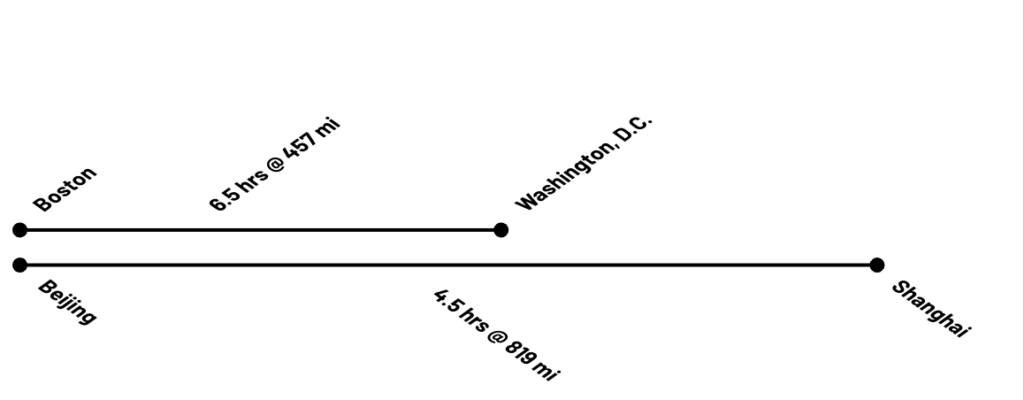
An American in a French-built Acela starting from Boston would only be able to get as far as Philadelphia 30th Street, 270 miles away, while in China, on a Chinese-built Fuxing, you’d cover the 900 miles in the same 4.5 hours. Which begs the question, in a globe defined by the Cold War between these two powers, the immense technological, profitable, and exportable testament that is the Beijing Shanghai HSR (High Speed Rail) corridor, why doesn’t America compete with its crumbling infrastructure, immense transportation inefficiencies, and ballooning cost of living and quality of life issues?
NEC: Layered Decay
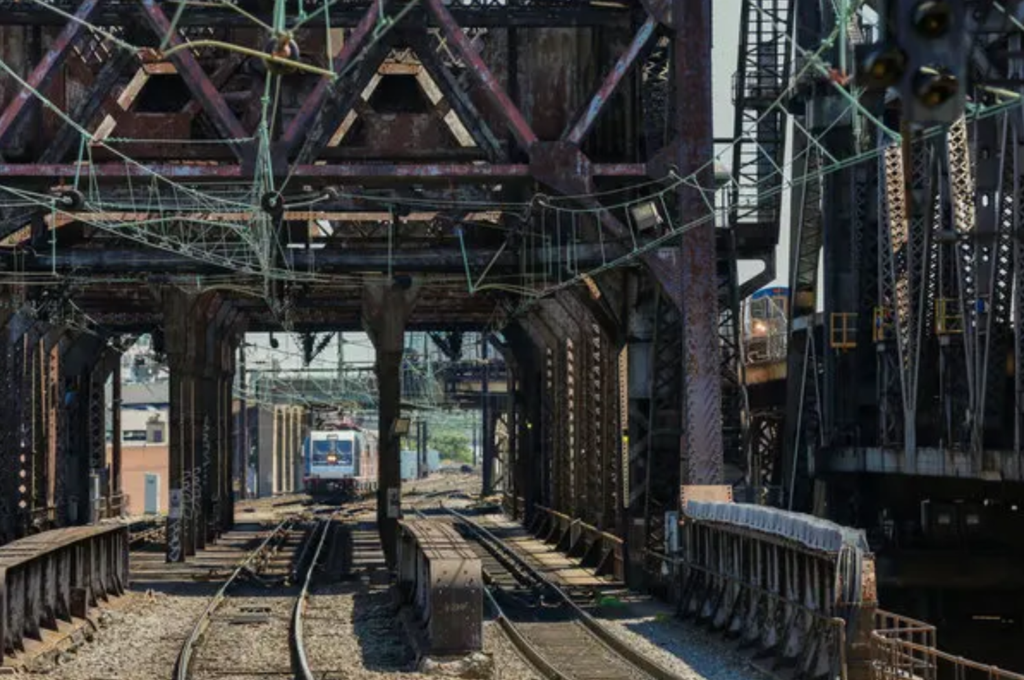
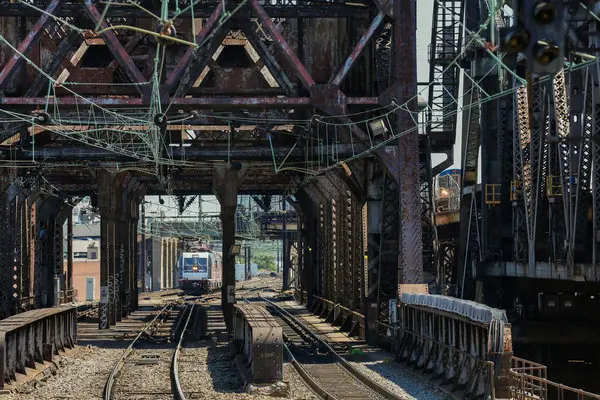
The Northeast corridor, carrying 2,200+ daily trips on commuter and Amtrak services, is held together by rusting bridges, hurricane and seawater-battered tunnels, and slow winding 20th-century tracks. This critical infrastructure that defines our nation and the globe’s most important corridors is symbolic of our nation’s misplaced priorities and inherent institutional corruption. Intense lobbying, unending subcontracting, and immense knowledge gaps all contribute to not just inefficient and infuriating inconsistencies. If you’ve ever had to cross the Hudson River tunnel, it costs the nation 170 Million Dollars a day in productivity loss. Previous generations have left us these megaprojects of their time, rusting and deteriorating, leaving us to think about how we will leave a mark on investing in our nation’s future.
Beijing–Shanghai: Modern Wonder of the World

Beijing South Station, opened in 2008, is the end terminus of the Beijing-Shanghai HSR corridor. One could argue that it and the Shanghai Hongqiao at the other end of the corridor, are endpoints of a 21st-century Great Wall, arguably among the 7 wonders of the modern world. The Beijing South Station itself is emblematic of this infrastructure going beyond practicality. Terry Farrell’s elliptical dome, 9400,000 sq meters of civic space, and a monumental soaring concourse organizes metro, 24 intercity rail tracks, and 10,000 passengers under a flood of natural light through tiered canopies inspired by the Temple of Heaven, a UNESCO World Heritage Site in the Forbidden City. The architecture itself represents the ambition of this project, embodying the culture and social impact of HSR. China tells us that stations are civic spaces, much like temples and monuments. Rituals and soldiers marching along walls have been replaced by 220mph trains creating billions of dollars in economic productivity and carrying 24.8 million passengers in one day.
Soft Power in Action

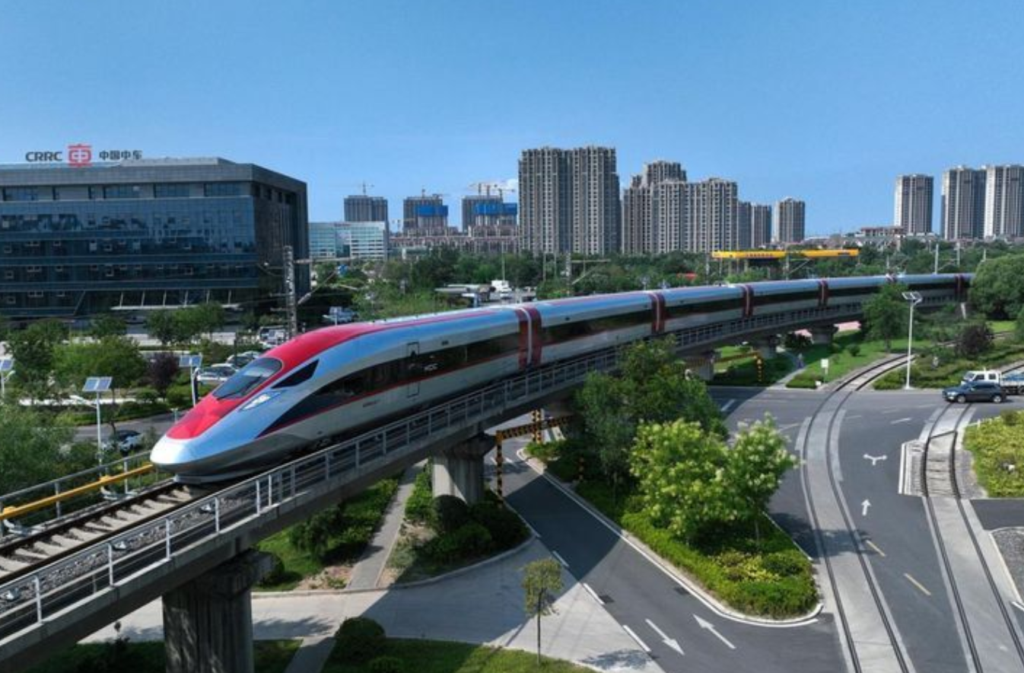
Rail is soft power. Companies like Germany’s Siemens, France’s Alstom and Bombardier, and Japan’s Kawasaki, the world’s most advanced rail manufacturers, all trained Chinese engineers and designers at the price of market access in the 2000s. China adapted, developed and founded its own homegrown HSR tech, filing patents by 2016. Now, Chinese state firms have been pushing tech to its limits domestically, while pushing production internationally.
CRRC, China’s nation rail manufacturer, Fuxing Hao (China’s HSR rolling stock series by CRRC), and Belt and Road Financing (China’s global infrastructure connectivity investments) structures allow China to find its place among the French TGV and Japanese Shinkansen as one of the most successful bets on engineering and infrastructure. Across Indonesia, Vietnam, and now the US, Chinese firms are manufacturing and producing, while America lags behind with a bloated construction policies and industry, see California HSR’s nearly 200 billion dollar cost overrun, while “Buy America” provisions keep the country dependant on foreign, expensive and uncompetitive production. America’s domestic failure comes at an international cost, and America is the only major economy that neither exports rail typology nor has a native functioning one to rely and compete with.
Latent Potential
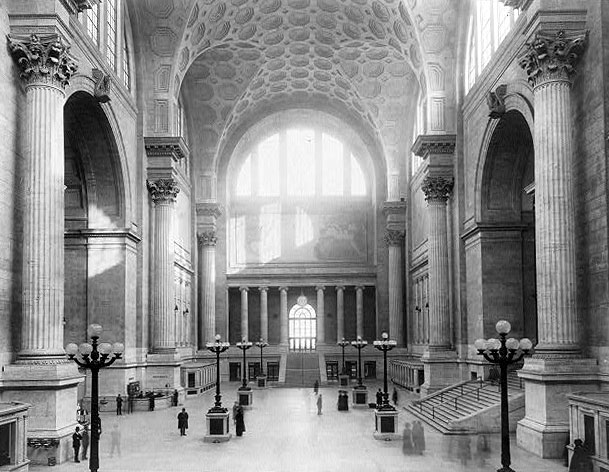
The answer to this clear shortfall is America a century ago, leaving a blueprint for our future. America’s basement, Penn Station, where “one once entered the city like a god, one now scuttles in like a rat” as described by Yale historian Vincent Scully. From monument to basement, and ambition to apathy has been the story of American rail. It took Japan to spark the development of our current iteration of HSR in America, the Acela. Now, China is our opportunity to spark a new advent of American rail. What is left is to break down the paralyzing inefficiencies, environmental policies and American apathy to invest in the future like those of the past did for us.


Other Articles

Skims Review
The State of America as a Civilization