


*Content Warning: some of the authors and novels included in this article discuss depression and suicide.*
Do you believe people see you as you are just through your writing? Do you think that just because you read a writer’s book that you can with certainty tell me everything about their character? Naturally, you’re inclined to think that you may be able to make some inferences about their character. In this world, we have made it increasingly more common to judge someone off just a few words. Instead of those few words, this will be centered around the many novels, autobiographies and other works by literary fiction writers from the 1800’s-1950’s. The world’s fantastical and complex authors have shown similarities in not just writing but their intelligences and mentalities.
“The worst loneliness is not to be comfortable with yourself.” – Mark Twain
Humans become isolated because they’re stuck in their own broken mentalities or forcefully separated due to how society perceives them. Many experience loneliness because of the human nature to be expressive in their identities and who they choose to judge based on those identities. Intentional or not, a multitude of authors such as Osamu Dazai, Franz Kafka, Albert Camus, Natsume Soseki, Haruki Murakami, and Wilkie Collins have expressed this idea through their writing.
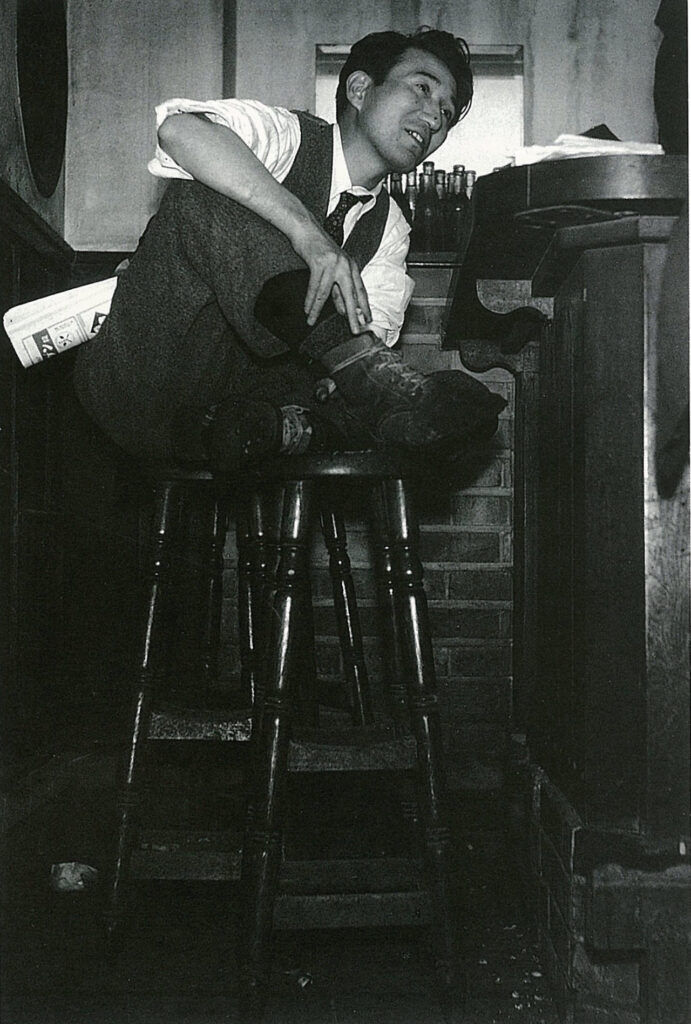
Osamu Dazai in his early life experienced many hardships, so did Franz Kafka. Their early life effectively influenced their desires to write and the outcomes of their works. In Osamu Dazai’s semi-autobiographical novel No Longer Human he lives a life where he has little faith in his own humanity, if he even believed he possessed humanity at all. This causes himself to be isolated throughout a lot of his life. In the first chapter of No Longer Human narrated by Yozo, the persona of Osamu Dazai, states, “As long as I can make them laugh, it doesn’t matter how, I’ll be all right. If I succeed in that, the human beings probably won’t mind it too much if I remain outside their lives. The one thing I must avoid is becoming offensive in their eyes: I shall be nothing, the wind, the sky.” Before this paragraph Yozo revealed how he truly was, he took attacks quietly in arguments and disputes. Yozo had also been criticized harshly by people who showed rage. That rage drove Yozo to conceal his identity because that rage had made him express one of the only ‘human’ emotions that he showed, fear. Yozo steps himself deeper in the loneliness he already possessed. Instead of the quiet boy he had always been he took it upon himself to become a ‘clown.’ Yozo even gets his well demeanored elder brother to laugh, even then he fails to reveal his true feelings to his father. He ended up upsetting him, this brought great despair to Yozo making him fall into another faux identity. Yozo’s life progresses horribly no matter how much he tries to redeem himself. As he falls into the depth of loneliness he attempts a suicide with a lover just to be tied to her forever. This is reminiscent of the author’s actual attempts on his life. Osamu Dazai succumbed to suicide a few days after this book was published and 6 days before his birthday along with his lover, Tomie Yamazaki.
The art of writing is used to express and conceal the identity. Many people consider No Longer Human to be equal to a suicide letter because of the author’s untimely death and references to his life. One of Osamu Dazai’s most popular quotes is, “If a man has the right to live, he ought to have the right to die.”
“Oppression is of the person, the community, and the world” – Fujisaka in To You the Immortal One
Oppression is unavoidable, it is ingrained in systems all around us; government, school, healthcare, jobs, and more. No matter how small you think it is, in the end it affects everyone. Many authors write about oppression directly, and some just about their daily lives, which reflects the sheer amount of oppression they face. Writing about oppression has been used as an act of rebellion and a testimony of hope for centuries. It can start wars and end wars.
Author Leslie Marmon Silko is a Native American who has heritage from the Laguna Pueblo tribe. Throughout the history of Native American people we have been raped, enslaved, indoctrinated, forgotten and slaughtered. Leslie Marmon Silko writes to preserve the near forgotten cultural heritage and traditions. She also criticizes the racism and colonialism that destroyed her culture. In Ceremony, Silko wrote, “He lay there and hated them. Not for what they wanted to do with him, but for what they did to the earth with their machines, and to the animals with their packs of dogs and their guns. It happened again and again, and the people had to watch, unable to save or to protect any of the things that were so important to them.” It’s clear Silko believed oppression of this kind stopped people from expressing their true thoughts even as their homes were destroyed in front of their eyes. Silko wrote many works of literature to combat the anguish caused by oppression. No human should have to go through it.
In the unreleased manuscript of To You The Immortal One, my soon to be released novella, the feathery god named Fujisaka (also called Tengban) expressed his concerns about oppression in the Ughyur region of China in the 1970’s. As he talks to Mìtán throughout the novella he continuously makes remarks about the human rights concerns and possible forced labor. It’s mentioned throughout the novella even if it has no direct correlation to Mìtán or Fujisaka because of the overall effect it has on the setting of the story and the humanity of characters living in the region. Fujisaka as a whole was created with the idea of forgotten gods in mind as the spread of religions such as Christianity and other big ones overshadow smaller regional religions. Some followers of larger religions have even deemed those smaller and nearly forgotten ones in an unpleasant light. That in itself is another act of oppression.
“If belief in god is human, if all I can do as a human is believe” – Mizi in Alien Stage
Religion is a spectrum consisting of devout worshippers, informally faithful, agnosticism and atheism. Of course there are many in-betweens and exceptions. A topic so ingrained in the traditions, cultures and livelihoods of a huge percentage of the world is undoubtedly going to show up in written works. Many authors dwell deeply into this topic, making it a recurring theme in their works as well as their daily life.
Crime and Punishment is a perfect example. The main character Rodion Romanovich Raskolnikov goes from an Orthodox Christian to someone who exhibits nihilism and loss of morality. I’ve heard people say that Crime and Punishment is a book to warn against nihilism and the acts of crime. Fyodor Dostevsky himself was heavily religious and devoted to Russian Orthodox Christianity. He pushes a very pro-religious topic into his works. Fyodor is quite the opposite of Raskolnikov and his other character Ivan Karamazov. In the Brothers Karamazov Ivan states, “Yet would you believe it, in the final result I don’t accept this world of God’s, and, although I know it exists, I don’t accept it at all. It’s not that I don’t accept God, you must understand, it’s the world created by Him I don’t and cannot accept.” Ivan’s words would likely be offensive to Fyodor and his devotion.
“Tell people that war is an evil, and they will laugh; for who does not know it? Tell them that patriotism is an evil, and most of them will agree…” – Leo Tolstoy
War is a controversial thing, many believe it’s good, many believe it’s bad. Whatever it may be, it’s still one of the most prevalent writing topics throughout history. Since WWII, war has affected almost everyone on Earth.
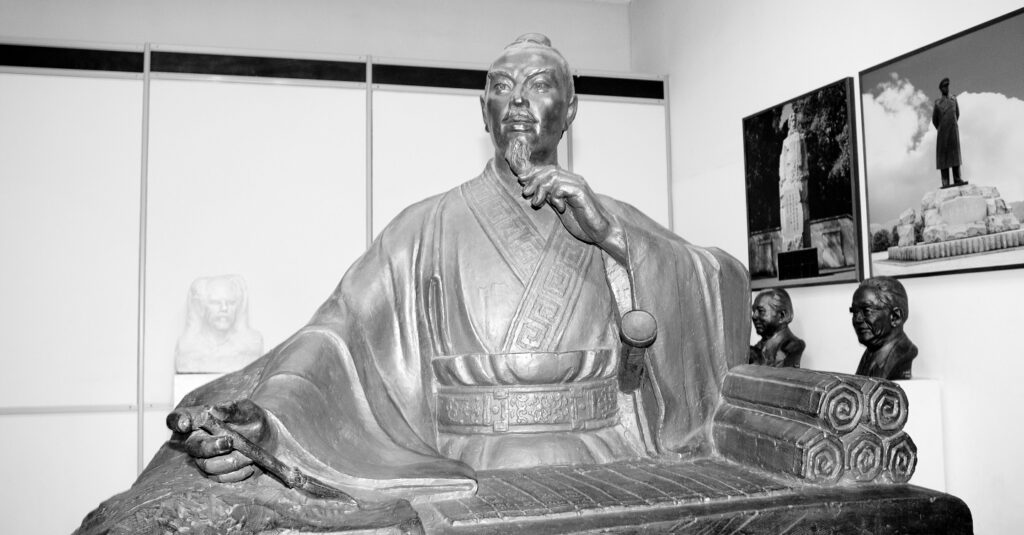
The Art of War by Sun Tzu explores war within life. Many readers believe that the Art of War is only used in combat situations, but the truth is that the principles from this classic can be used in any aspect of life. War is not only bloodshed. War can be psychological, mental and even a tool. War could simply mean a conflict between two opposing parties. Sun Tzu believes that things can be overturned through strategy and strategy alone. There is no need for fighting if you can make the enemy retreat without bloodshed. This art is essential in life. Citizens of a country may choose to use peaceful protest as a means of overthrowing political changes instead of pure violence when not necessary. It is a short but powerful piece of literature.


Other Articles