
Is Rome Truly as Great as People Believe? A Legacy Shaped by Propaganda

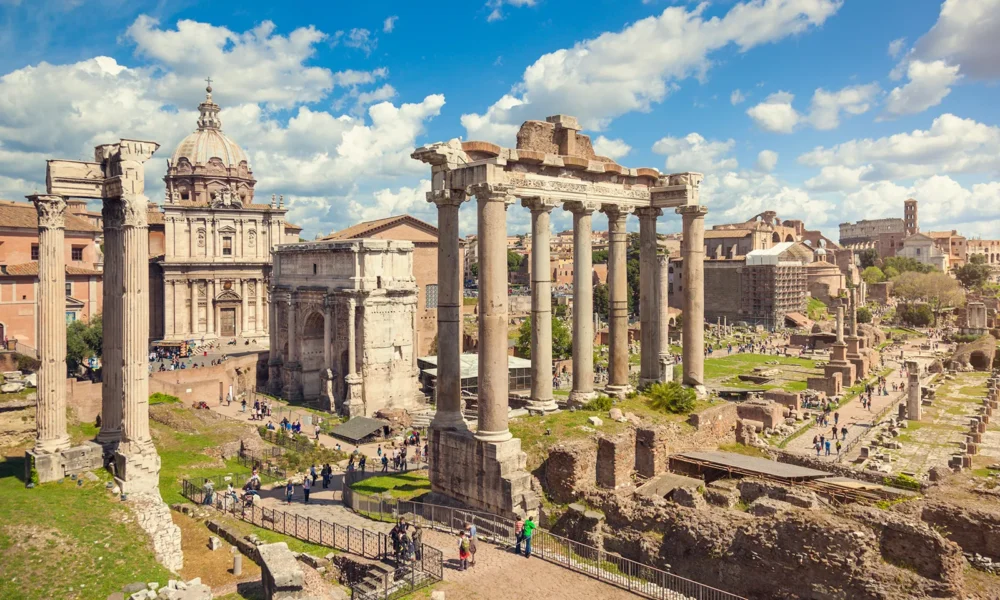
When asking someone what their favorite historical empire is, there is a good chance Rome is the answer. It is known as one of the greatest empires in history, as well as an empire that left behind crowded tourist attractions like the Colosseum. However, Rome wouldn’t have this huge legacy without propaganda. The idealized, glorious version of Rome we know today came from the influences of literature, politics, and selective storytelling that elevated Rome.
A great amount of idealization of Rome arose from Mussolini’s dictatorship. With the post World War I recession, the economy collapsed and forced many into poverty. The people could not afford food, so they turned to leaders who claimed they could save the economy. Extremists, believing a man could save them from impoverishment, supported Mussolini’s rise to power. His campaign heavily relied on propaganda, especially propaganda which exploited the glory of the Roman Empire. By presenting Rome as such a great empire, Mussolini was able to use this imagery to express to the people a return to greatness for Italy. The use of Roman imagery did not just help support his rule, but it also continued to strengthen the idealized vision of Rome.
This propaganda has left a legacy, reintroducing Rome’s glorious past to the 20th century. Mussolini compares himself to Augustus, one of the greatest Roman emperors that turned the Republic into the Roman Empire. This comparison connected his rule to such a great leader and strengthened his legitimacy. Despite Romans absolutely loathing kings, Augustus was still able to seize power and was loved by the people. This acceptance was caused by Caesar’s influence on the people’s view of the republic, and allowed for his successor to be welcomed.
Caesar made a name for himself through his extravagant games, his land reforms, and his campaigns in Gaul. His popularity was no surprise, considering he catered to the public. Caesar had played a huge role in making the glorified image of Rome that we know today through propaganda. In Caesar’s most famous work, Commentarii de Bello Gallico, he describes his campaigns in Gaul in the third person. These reports were read aloud to the common people, so instead of sounding egotistical by using first person to talk about war experiemces, Caesar’s use of third person made him look heroic. It functioned as propaganda, as he could exclude his many failures during his campaign and focus only on his victories. By controlling what was told, Caesar had shaped Rome into seeming powerful as well as justified in its expansion.
Though it was not only his works that influenced the people, Caesar made sure he was included in people’s daily lives by commissioning his own face onto Roman coins. The prints on Roman coins were usually reserved for the gods or notable figures, but Caesar had broken this norm to elevate himself. He had established himself as a heroic, memorable figure whose image people 2000 years later still know. The idea of placing a face onto currency has continued in modern society today, where national figures are still printed onto money as a symbol of importance or power. This concept never ended with Rome, and it displays how Rome’s influence still exists. Beyond printed money, we still consume literature where Romans are further idealized.
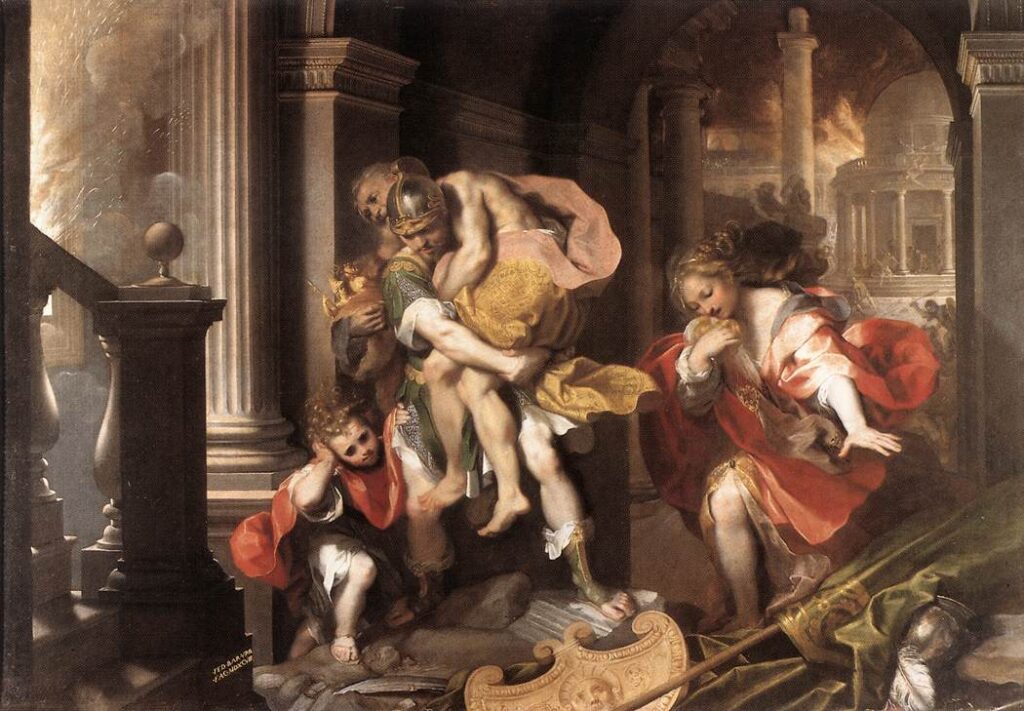
One of the most famous works in classics, Virgil’s Aeneid is a story on the founding of Rome. Commissioned by Augustus himself, Virgil writes the epic to glorify the current regime. Aeneas, the main character, is destined to found Rome, making Rome seem like the fates came together to specifically create it. Rather than showing the development and the construction of Rome over its long history, it focuses on the future. There is a very brief mention of Romulus when mentioning the future of Rome, but it never focuses on the founding myth. Rome isn’t presented as a great empire that grew over a long course of history, but instead it reaffirms this idea that it was always meant to exist, enhancing the idealized image of Rome.
Even while Rome is remembered as one of the greatest empires in history, their reputation is built off propaganda. Through their self promoting narratives and cherry picking their own history, Rome was able to create an image of a glorious empire, an image which has lasted longer than the empire itself. However, we shouldn’t dismiss Rome as nothing more than propaganda. The reason their propaganda was so effective in the first place, is because they were built on actual accomplishments. Rome’s impact can still be seen today in the words we speak, the structure of our calendar, and their foundations on the government. Even though many Roman sources are biased or used to push a certain agenda, they still reflect a civilization of great achievement. In the end, Rome’s legacy is a mix of propaganda and history, reminding us that the past is often shaped through storytelling and the truth.


Other Articles