


Latin is dead. So is Ancient Greek. It is simply a fact that the typical applications of most languages just don’t extend to the classics. But despite that, there are still people who avidly study them and many of our own Boston students have some level of Latin and Greek education. Why? Well, Maia Lee-Chin can give us some excellent insight into that.
Lee-Chin is community engagement manager for Boston public schools, a classicist, and a debut author, with her first book coming out this year. Her book, “Et Cetera: An Illustrated Guide to Latin Phrases,” is set to be a beautiful outline of impactful Latin phrases throughout time and its publication is highly anticipated. But contrary to what you might expect, Latin is not her primary interest. According to her, most of her research concerns the “Iliad,” the epic poem attributed to Homer and written in ancient Greek.
“There’s a lot of things I do with the Iliad,” she said. “So thinking about the world tradition [and] how it was a story that was not written down originally, how it was kind of composed orally, [a] freestyle, rap kind of situation. But I also think about how it can be applied in early elementary curriculum, which is kind of unique. I don’t think anyone else is doing that.”
This innovative use of such a timeless text is particularly unique in its target audience: young children. Most receive a classics education in high school or college, if at all, as it is considered too heavy or complex. And though Lee-Chin herself didn’t discover Latin until her freshman year of high school, she feels that she is a “born-classicist.”
“So my name is actually ancient Greek. [I was named after] an ancient Greek goddess, Maya, who’s the mother of Hermes. […] I also found out recently that my ancestors who used to be enslaved were some of the first [black] people […] in America to go to college for classics. So I found out that I’m a classics nepo baby basically.”
Nepo baby or not, young people have a great deal to gain from ancient language education. Many schools tout its ability to instill critical thinking skills, historical perspective, and a basis for Romance language. And Lee-Chin echos this, adding,
“It is really just a way of broadening horizons. And a lot of the material is just so different than what we’re exposed to on a day-to-day basis. But at the same time, a lot of the material ties directly into what we’re experiencing.”
However, she also acknowledges that this type of education is not only not accessible, but not truly necessary. Though schools like Boston Latin Academy, Boston Latin School, and Roxbury Latin all have their namesakes as a graduation requirement, their Ancient Greek programs are far sparser. Not to mention the countless schools who have no ancient language programs to begin with. Lee-Chin says, “It’s not uniquely beneficial for young people. I think that is just one part of a whole of things that can develop us as human beings and as people. […] “I don’t like to say that it’s necessary because not everyone has access to it. So if it was necessary, we would be a lot worse off. […] I don’t think it’s necessary at all. I think it’s nice to have.”
And she isn’t wrong, you don’t need classics to be a well-rounded, intellectual person. At the same time however, that doesn’t cancel out the positive effects of the study. For as many students who resent that they are forced to take Latin, there are still many more, like Lee-Chin, who fall in love with it or other ancient languages. So before you dismiss classics as a long-dead husk of a study, consider just how useful and interesting it can be.
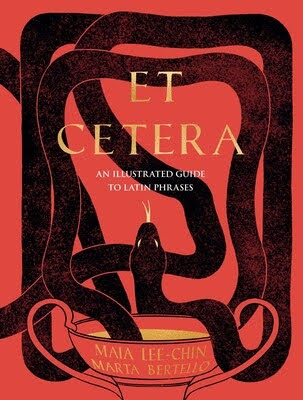
By Maia Lee-Chin – Illustrated by Marta Bertello
Out August 27th