
Universities Need to Contribute More to their Communities

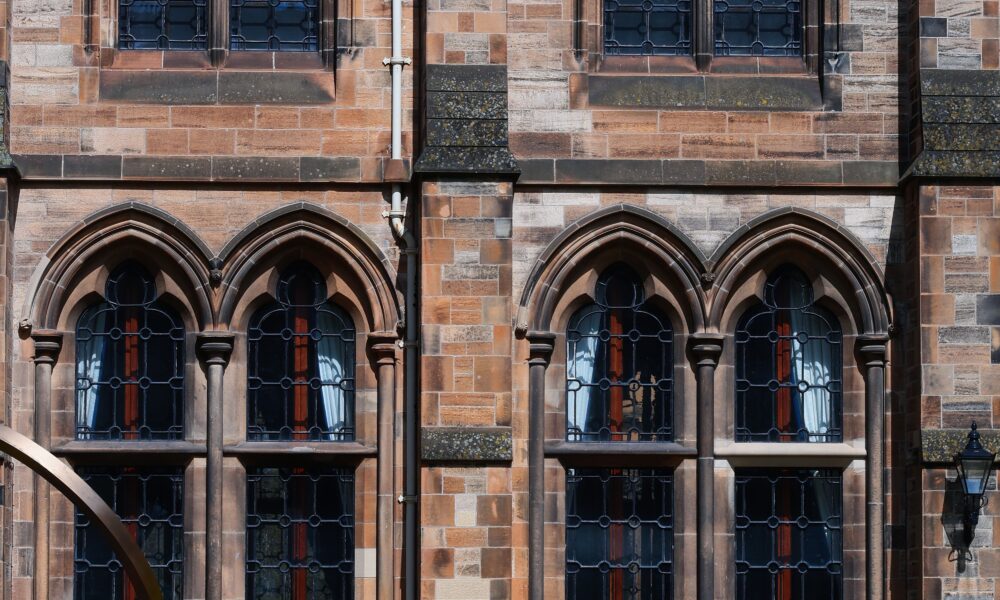
Should the ivory tower pay for the services it uses? Universities use public infrastructure, such as the fire and police departments, but don’t pay taxes on their educational and administrative buildings. This process has relocated the burden upon local businesses and residents. It’s especially impactful, as universities are often among the top landowners. Harvard, on its own, owns about a third of Allston; over 190 acres of which are tax-exempt. Similarly, MIT also owns a whopping 5% of Cambridge. Whenever I walk around Boston, all I see around me are university spaces. From Harvard Square to the BU campus on Commonwealth Avenue.
In 1954, Congress made the 501(c)(3) designation. This exemption applies to organizations that educate or train people. Or, these organizations can instruct the public on subjects useful to them and beneficial to the community. Most organizations that apply to be classified under 501(c)(3) are considered nonprofit and receive a tax exemption under that classification. According to Congress, nearly all universities use this exemption. Every year, this designation saves nonprofit higher education around 1.7 billion dollars in federal tax payments. This is a great discount from the government for these schools, but it is especially taxing for cities that depend on property taxes for a large portion of their funding. 73.1% of Boston’s budget is comprised of property taxes. University tax exemption creates a major void in the budget.
This tax provision has been able to help set up education all across the country; however, it puts a significant burden on the residents of a city. In Boston, more than half of the properties fall under a not-for-profit classification. The city thus doesn’t receive any tax money from these areas. In Boston, the pressure falls upon local businesses and residents to pay the missing tax money. This problem has been especially exacerbated for locals due to an unrelated plunge in commercial property value. This is especially unfair as universities often benefit a lot from public services provided by the city. Overall, the presence of colleges often puts significant pressure on the city, despite their positive benefits, which is then offloaded to residents.
A major initiative that has been put in place to combat this is the PILOT program (Payment in Lieu of Taxes); it encourages tax-exempt institutions to make contributions to the city. PILOT encourages many nonprofits to contribute part of the taxes they would originally pay. Their standard request is a fourth of the taxes they would originally pay. However, there isn’t any real pressure for organisations to actually give any money. Contributions over the years have stalled, and even though increases have been marginal over the past decade, many major organisations have been falling behind on their PILOT payments. Boston College is an example of this, in 2025 they paid only a tenth of the requested payments. Endi Eckstein, a Boston resident and a member of the PILOT advocacy group, says that “The city is strapped; everybody needs to step up and really play their part. And it’s not enough to ask me, as a resident of the city who pays taxes, for me to sacrifice,” and she’s right. A university like Harvard, which made 6.7 billion dollars last year, should pay more than 6 million in PILOT payments, instead of relocating the economic pressure on ordinary residents.
Another way that universities can contribute to their communities is through their various establishments. Many colleges have their own gyms, pools, or libraries that aren’t open to the public. The community would be able to benefit from these already built resources if these institutions opened up their venues and allowed people to use them, and doing so would cost universities relatively little. Additionally, colleges can provide educational programs to the community. The institutions can offer programs for high school students which would help them learn and develop as people. A great example of this is MIT’s ESP program, which provides extracurricular courses in all academic fields. While the program requires payment, there are many ways to receive financial aid.
Partnerships with local businesses and programs can also greatly help neighboring communities. A university often can act as a cash injector when properly embedded in an area. Universities can benefit equally from these collaborations. A pooling of resources and experience pushes both the goals of the institution and the city forward. An excellent example of this that has already been instituted by many universities is student-run clinics. These clinics care for people who are uninsured and help students gain their own experience. BU has been able to set one up in Boston, which so far treats thousands of patients every year.
There are many ways for universities to further contribute to their communities. From participating in and following PILOT programs to providing resources to the communities, the possibilities present themselves. The real question is how to make them actually do it. Many universities already put it as a goal to help the communities they are part of. It’s important to keep these institutions to their mission goals. Many efforts have already been successful. In Evanston, Illinois, Northwestern University has committed 150 million to help the community. In Sacramento, California, UC Davis has established a community partnership program. Even in our own Boston, Massachusetts, Northeastern has agreed to increase its PILOT program payments. Change is possible. As citizens, we must push these institutions to provide more for their communities.


Other Articles

Wealth Inequality & The Co-Op Solution