Why Our Planet Should Be Properly Taken Care Of

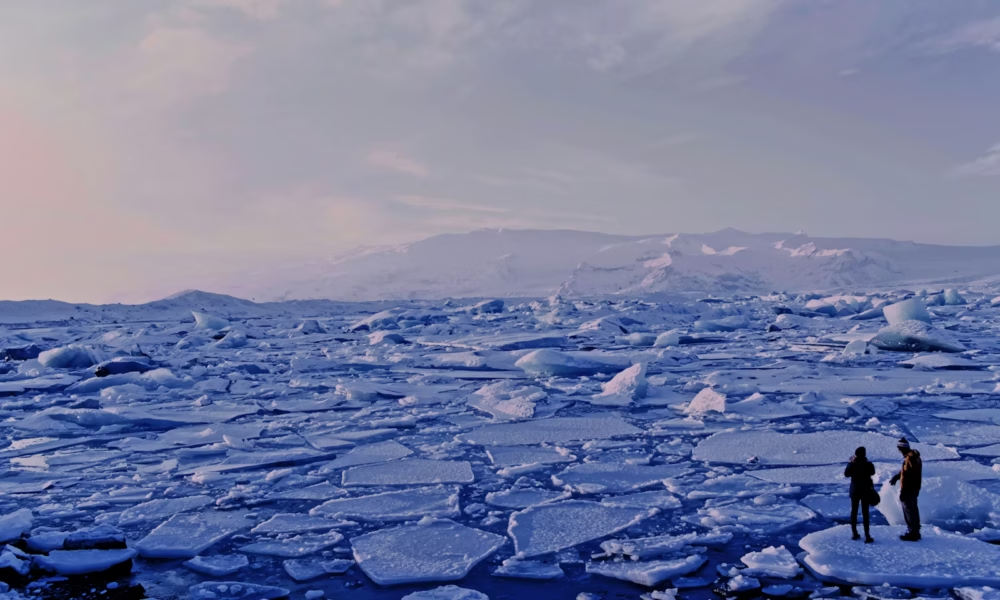
Have you ever wondered to yourself why it is getting so much hotter? The environment should have more people focusing on it. The more it’s left unattended, the worse it’s going to get. Teens should care about the future of the planet instead of just the weird weather they’re experiencing right now.
Greenhouse Gasses and Their Effect on Our Planet
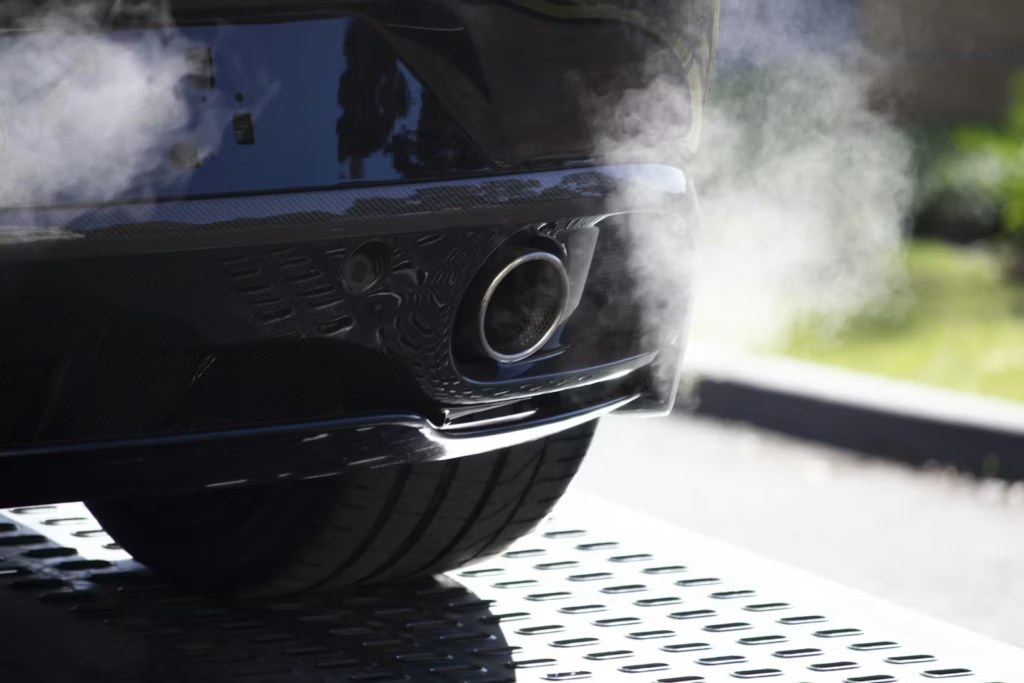
Burning fossil fuels is bad for the planet, and here’s why. When fossil fuels are burned, CO2 is released into the air. Cars run on gasoline, a fossil fuel, and car emissions include CO2. CO2 is helpful to the planet, it’s the same gas we breathe out and it’s what plants use to make energy for themselves. But when there’s too much CO2 and not enough trees can reduce it, CO2 gets trapped in our planet’s atmosphere and heats up the Earth, like how hot air stays trapped in a greenhouse. Greenhouse gasses are what cause global warming.
Melting Ice Caps
Teens should care about the melting ice caps and how if they melt even more they’ll cause a major impact on the planet. The evidence states “The world’s glaciers are melting faster than ever recorded under the impact of climate change, according to the most comprehensive scientific analysis to date.” The environments most at risk are coastal areas, which means places close to oceans, like Boston and Cape Cod. If sea levels rise, these places will experience flooding.
The Future of Animals (including humans!)
Since global warming is on the rise bees have a declining population. This is because their parasites, the Varroa mites, don’t die off in the winter because it isn’t cold enough. If bees don’t get help, a chain of reaction could happen to the environment. Less plants will be pollinated, which means less food will grow. Less bees could mean less apples, mangos, and cherries. Humans will have less to eat if the bees become further threatened by global warming.
Because of the construction people, there’s less space for the animals to have to themselves. “As of 2023, IUCN has assessed 89,856 animal species, 17,416 of which are listed as endangered, accounting for 19.38% of the total animal species assessed.” This shows that in 2023, 17,416 species were declared endangered. If people don’t start changing the way they treat the environment, the animals that are declared endangered may become extinct. Like with the bees, that will have negative consequences for people.
Conclusion
In conclusion, people should embrace helping the environment. Maybe don’t use a car for a five or ten minute walk so you can minimize gas emissions, which will reduce carbon dioxide emissions over time, which will reduce global warming. It’s also important not to litter, and to clean up after yourself. For example, if you pick up your trash at the beach, animals like turtles, crabs, and seagulls won’t be affected by it.



Body Image and Social Media
REVIEW: KATSEYE’s 2025 Concert in Boston
