

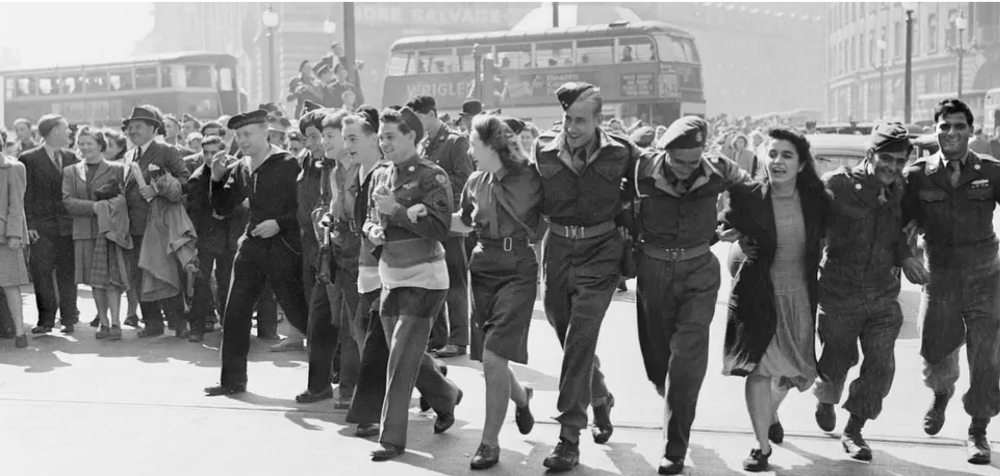
September 1st, 1939, Poland soil was trampled on by the bloodstained boots of Nazis. On this very day the world would change forever and be impacted by what’s known as the second world war. Culture, jobs, laws, economy and military power have since been heavily affected around the world. Even common aspects in your own life might not have existed without the impacts of WWII. Now what impacts are actually made in all of these categories? How does it actually affect the modern world?
Economy
One of the most important powers in the second world war was the Soviet Union (now known as Russia and other slavic countries). WWII has contributed a lot to the economies of countries still standing today. As the end of the war ended they gained a lot of land and power. Once they were recognized as a world power they gained fame and money. During the 1960-1970’s there was a boom in their nuclear power plant based infrastructure. Their boom in nuclear power helped their economy. Rosatom State for example is a corporation that builds and manages nuclear power plants in Russia and nearby countries. This company oversaw nuclear disasters like Chernobyl and Kyshtym. From the Rosatom State corporation’s website it says, “The institute commenced its designing activities in 1968. The first project – design of Armenian National Power Plant (NPP) – became a real scientific breakthrough. The seismic resistant nuclear plant fully proved its safety and withstood the severe Spitak earthquake.” We can see how advanced slavic nuclear power plant industries are today because they are a huge part of their economy and source of wealth.
The Economist published an article titled, “Putin’s Radioactive Chokehold on the World” that shows that even though Russia’s economy was developed by WWII, Russia’s radioactive power has an effect on the world in general. It again mentions Rosatom and its addition to Russia’s and the global economy. Also, the word “chokehold” basically means how much Putin as Russia’s leader has control over the national nuclear industry. Russia dominates the world of nuclear fuel and technology among many other things. This made other places such as other slavic countries and countries around the world improve in terms of nuclear technology and development, in order to compete with them. My point is that Russia’s economy and nuclear power has been influenced by the ending of WWII and has impacted the global economy as it grows stronger.
Military Power
As is well known in the history of WWII, Nazi Germany (Deutsches Reich) had a lot of military power and even allied with powerful military forces such as Kingdom of Italy (Regno d’Italia) and the Empire of Japan (大日本帝国). WWII has changed the way these countries can use their military powers in past and modern times. Before this war Germany’s military was already limited by The Treaty of Versailles, but they broke this treaty and made a very strong air force. After WWII the main ally powers split Germany into four sectors to keep the German forces under control, and eventually split Germany into East and West. Even during that split Germany still had to uphold its post WWII treaties. As of January 8th, 2025 Germany holds rank 14 out of 145 in the global GFP (global firepower). It can’t start waging war unless in self defense and they can’t have biological or nuclear weapons, but they still stand strong with the help of European allies in NATO and the European Union. This is similar to Japan, which has a pacifist constitution that says similar things about acts of self defense. Italy had a whole reform and such. It’s a very long and lengthy topic. This actually ties into our next section.
Laws and Current Wars
After all the inhumane events that took place in Nazi Germany during WWII the Universal Declaration of Human Rights (UDHR) was made. This declaration still affects the world today by limiting what could be done during our current-day wars and restricting the creation of unfair laws. Imagine this: if the UDHR hadn’t been written, there’s a slim chance me and my twin would be put into an inhumane experiment, like Nazis did to people in concentration camps like Auschwitz during the Holocaust (the mass murder of Jews.) Thankfully, this universal declaration is still intact today and is used in current wars. As of 2025 there are many ongoing wars, and this document limits what can happen during them. However, one of the current wars is between Israel and Palestine. Israel signed the UDHR and has received backlash for going against it almost immediately, but the country is continuing to go against it. A human rights committee report from the Human Rights Watch showcases a report made against Israel and multiple pieces of legislation from the UDHR that shows why Israel is violating those promises. “In particular the Committee expressed concern over Israeli interrogation practices, urging Israel to cease using methods of handcuffing in painful positions, hooding, violent shaking and sleep deprivation that are believed to be authorized in Israel’s confidential Landau Commission interrogation guidelines; the use of administrative detention; the use of prolonged solitary confinement; discrimination against Palestinians living in the Occupied Territories.” The UDHR, created as a result of WWII, has been used against the Israeli government to protect and defend Palestine and other countries. As we see here it does in fact still affect current wars.
The UDHR, while in effect, is being ignored by many political leaders but can still affect them. The UDHR says, “Everyone is entitled to all the rights and freedoms set forth in this Declaration, without distinction of any kind, such as race, colour, sex, language, religion, political or other opinion, national or social origin, property, birth or other status. Furthermore, no distinction shall be made on the basis of the political, jurisdictional or international status of the country or territory to which a person belongs, whether it be independent, trust, non-self-governing or under any other limitation of sovereignty.” Anyone living in the United States may know that this relates to our constitution and is currently not being followed by the President Donald Trump and ICE which state that they deport people based on color, language, origin, etc. They even have detention camps which many critics call concentration camps. The National Immigrant Justice Center states, “People in detention experience inhumane conditions and rights abuses that include medical neglect, preventable deaths, punitive use of solitary confinement, lack of due process, obstructed access to legal counsel, and discriminatory and racist treatment.” That follows what the UDHR was trying to avoid. This directly mirrors my claim. The UDHR is still in effect and this will have an effect on this current environment.
Gender Roles in The Workforce
During WWII many men were sent to war. This reformed gender roles in jobs around the world and has built a basis for gender roles in modern times as well. In America most of the men sent to war were ones who were 18-38. Although women were also involved in the conflict, a lot of women were in charge of the jobs left by men who were drafted in the army. The “We Can Do It” poster is one of the more popular examples of the U.S recruitment tactics for women to take what were traditionally men’s jobs in manufacturing things like planes, tanks and other necessities during the war. Even jobs as war nurses were starting to become occupied by women. “Between 1940 and 1945, the female percentage of the U.S. workforce increased from 27 percent to nearly 37 percent, and by 1945 nearly one out of every four married women worked outside the home.” (History.com) 10 percent is a drastic amount especially for such a well populated country. Women in the workforce has nearly doubled that number in recent years. We can see how much more women have been not only accepted in labor roles but dominated in some fields. Many other countries experienced the same thing, with women taking on more traditionally male jobs.


Other Articles

How to Manage Your Time
Reasons why cooking is a necessity