
Imposter: Mass Book Award Winner Cait Levin Talks Perseverance Through Imposter Syndrome

Note: This interview has been edited for clarity and concision.
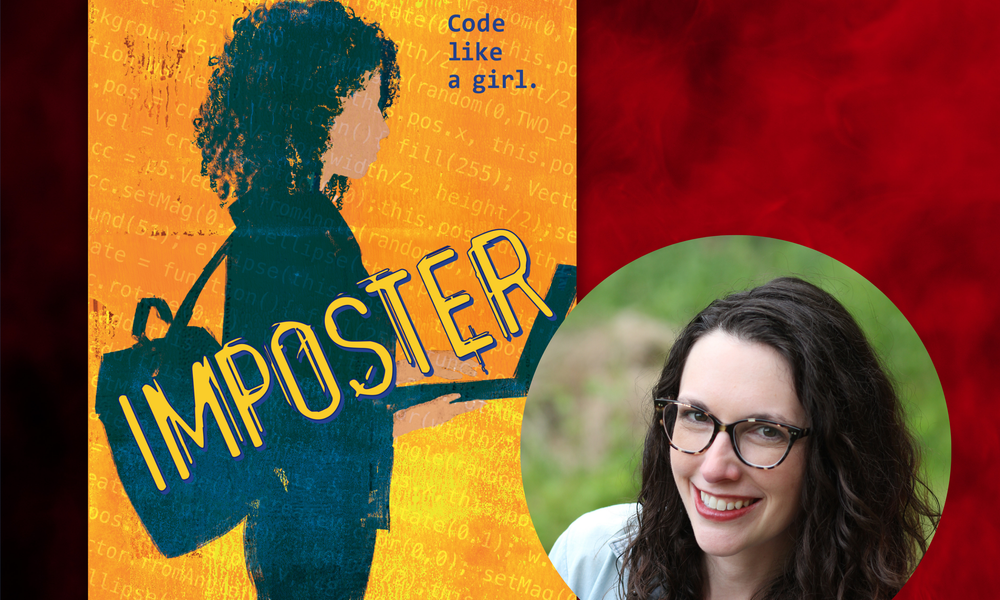
Each year, the Massachusetts Center for the Book recognizes significant works created in the past year by Massachusetts residents. This year, Cait Levin’s book Imposter won the Middle Grade/Young Adult award, signifying the importance of the work.
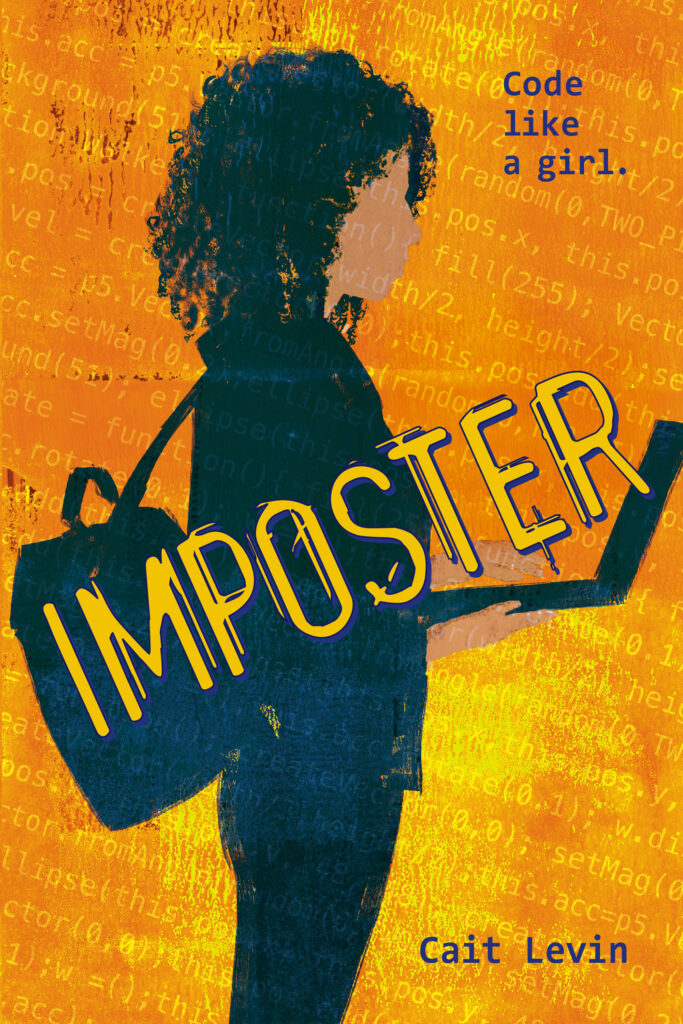
Imposter follows a high school sophomore named Cam who has decided to take the computer science elective at her school this semester, and, along with her best friend Viv, joins the RoboSub team. However, she finds that both spaces are male-dominant and struggles to feel like she fits in or knows enough about coding to be in either space. With Viv, she battles the judgement of the boys and the weight of an unsupportive teacher while trying to prove to everyone–and herself–that she belongs.
Cait Levin was originally an educator and librarian in a few different schools that spanned grades Pre-K to 12. Today, she works in tech startups, allowing her to experience what it is like being one of a few women in a tech space. I sat down with her to discuss her debut novel Imposter, her journey writing it, and what her goal is with it.
What first got you interested in the field and why did you decide to base the book around it?
I was also a kid who was into computers. I was in middle and high school in the early 00s, and so that manifested for me in a lot of computer games. I would mod the computer games, which is making changes and patch changes to the games so that they behave differently. And I took the computer classes at my school, like the electives that they had, and none of them were about learning to code. There was no way to learn to code at my school. I didn’t even know that I didn’t know that, because I only knew what I had at my school, and it was a little before Google. I was still in school when we were doing these really archaic things that were terrible for finding things on the internet. And so, I couldn’t just go to Khan Academy and learn this, right? And so when I was choosing what to study in college and beyond, I didn’t go into engineering code at all, because I literally didn’t know I could do that. And now, I work in tech. I wrote code today. I use AI to write code, which is so interesting that the industry has come here, right? And now I work on a product and build it with engineers, which is really cool.
But why I wanted to start here was that even though I wasn’t an engineer, I was working in tech on the other side. So, I was working in schools, and I was the tech person. I was working with students and teachers about how to use technology in their classroom, how to incorporate it into their projects, how to do research projects that involve creating new technologies, that kind of stuff. Everything around code, I was doing. And so, it just felt like a world I was very familiar with.
Why did you choose to write the book around the world of coding?
Yeah, I think that my number one reason is that I just saw a gap in especially young adult books. I used to work in a library, and so I was in charge of buying the books for students, and there were no books about this. There were no books, especially [for] the girls that were coming in and saying, “I want to make a new software,” there was no story that reflected the experience of being that person. Growing up, I didn’t have it [either]. And so, I was seeing students hit the same kind of roadblocks that I hit, and there was still no resource about that. It’s empowering to know that you’re not the only one experiencing that, and that this is the problem that isn’t just about you. It’s actually a societal or a cultural or a systemic problem. And if we don’t talk about it, people won’t know.
I thought the use of real organizations, such as Girls Who Code and RoboSub, was a great addition for realism and introducing the audiences to resources. So how did you decide which organizations to reference?
These were all organizations that I used as a teacher, and that my other teachers used as resources when we were working with students. So, when we taught students how to code, sometimes they’d seen scratch before or visual block-based coders, but if they were ready to just look at lines of code, we showed them P5. And that’s what Cam uses.
Girls Who Code has so many resources that you can just do on your computer, and they also have all these free camps. In the back of the book, I put all of these other resources because I really wanted to create, for the person who doesn’t know where to start or doesn’t have the infrastructure at school to know how to get involved, a little key, where [they] can look at any of these things as a place to find more research, resources, and get started learning.
And what inspired you to base the whole book on RoboSub, specifically?
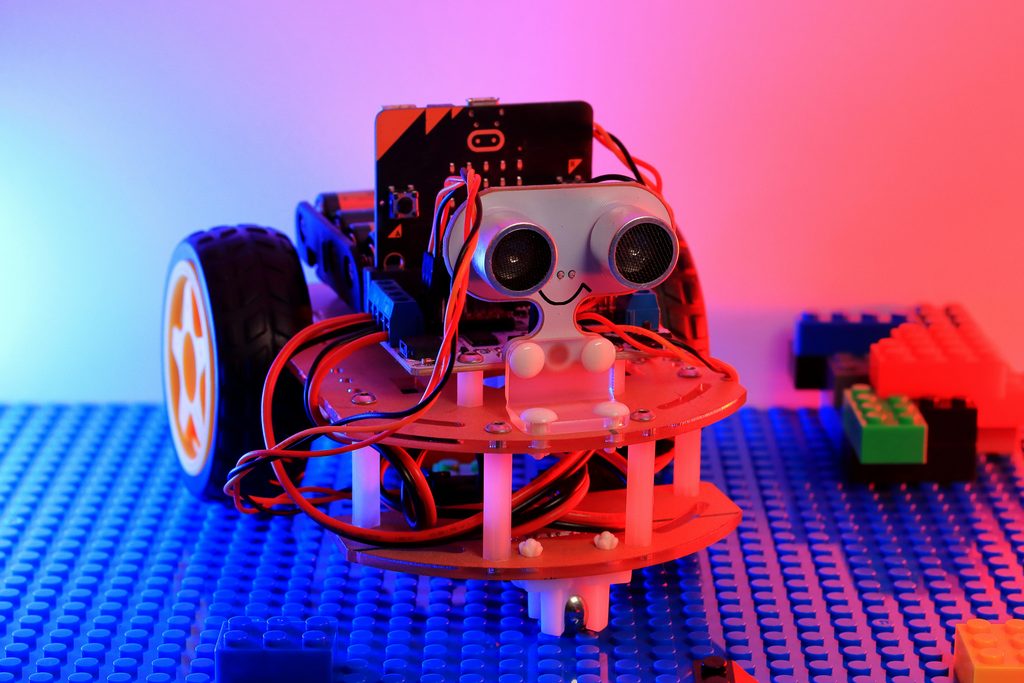
That’s a good question. Why RoboSub? Why not a software or some kind of hackathon thing? The way that I started this book was, I just saw [Cam]. I saw her sitting in her room, soldering with that candle. And so I was like, “What would she be doing at school? What clubs would she be interested in?” She is into fabrication, which is a whole other type of engineering, but she has to know both. She needs to be able to code and fabricate. And so, where would she go at school to be able to do those things? And RoboSub is really one of the few clubs that incorporates all of that together. All of the robotics programs that RoboNation has are very cool for doing that, and it just felt like it would be the right playground for her to get involved more deeply, and not just in class. I don’t know how it is at your school, but at a lot of schools, you can’t go into those spaces and use those machines unless your teacher brings you, so I needed a way for her to be in there.
Yeah, definitely. So now I want to talk about the book specifically, and one thing that definitely stood out to me was Mr. Lenox as the character. It was just really crazy how he didn’t really want to stand up for anything. How did your experience as an educator in the schools you’ve worked in influenced the characters of like Mr. Lenox, Ms. Newberry, and the principal?
It influenced them a lot. They’re not based off of any specific people, which I have to say for legal reasons, but also it’s true. [I’m] not like, “Oh, this is so and so that I knew.” I was really trying to think about what are the different types of people that you encounter when you’re in a situation like this? There’s an administrator who’s usually got so much going on that they’re not [aware] of [some situations], even if they might have good intentions. The principal has no idea what’s going on; way below his pay grade, right? When it comes to him, he’s like, “This is a problem,” but it’s not on his radar, and why would it be?
And I think with Mr. Lenox, like, he never does anything outright to hold her back. It’s not that he has any ill will. It’s that he is not behaving with intention, that he’s not taking the time to notice the impact that he’s having, and how it might feel for the students in his room. And I think it’s really easy for teachers to fall into that, unfortunately, because they have so much that they’re balancing and so much that they’re trying to do. And it’s not about taking explicit action that makes a space feel and welcoming. Sometimes it can just be about not taking explicit action to make it welcoming, especially when you’re pushing against an existing culture of [a] space or in a field like coding. And I think that there’s a lot of work that’s been done around this in math. I feel like teachers are very well informed about this in math and science. But engineering, we haven’t totally cracked yet, which I find interesting.
Then with Ms. Newberry, I actually think there are a ton of intersections with art and robotics. Fabrication is fabrication, and if it lights up, whatever, but it’s the same type of spatial reasoning. How do these mixed medias go together and stuff like that? So I was thinking, who else could help [Cam]? Who else could be someone who has the shared skill set, that could help her keep going if she can’t feel like she can keep going here. I love having characters that are just yes-people. And her best friend’s kind of like that. Best friends, just like, “Nothing will stop me. I’m a yes, we’re gonna go.” [Ms. Newberry is a] teacher [who] doesn’t know anything about robotics, she’s like, “I don’t know,” but she’s just willing to say yes, and be helpful, and sometimes just physically being there and being supportive and open is all it takes.

Yeah, I definitely get that.
Despite having support from her teacher, or not most of the time, I did notice in the story that sometimes Cam has conflicting opinions with her parents. And I was wondering, why did you decide to include this conflict? I feel like it’s very realistic and important, but I feel like it should be addressed more and I was just wondering why you decided to address it?
I took a class once about writing for children, but really, it was like any books that aren’t for adults. And something that is often true is that the character who is under 18 will either have no parents, completely absent parents, or nightmare parents and there’s no in between. And if you think about a lot of famous stories you’ve heard of, like in The Hunger Games, one parent is dead, one parent is totally checked out. Harry Potter, orphan. Think about the stories: the parents are always missing. I feel like it’s because we’re like, “Well, we have to get the parents out of the way so that the kid can deal with it and make choices.” [But] that’s not how a lot of people live, right? A lot of people live with their parents. And their parents are a mix of supportive and not supportive. They’re their own people, and so they have feelings about stuff, too. What does it look like when you have parents that want to be supportive, but kind of have their own fears about what you’re doing or how it might impact you? And there was actually less of that in the first draft of the book, but my editor was really great about making space for me to expand it. She was like, “I think that you could actually add more here,” and so I was able to add a lot more complicated situations with Cam’s mom to really dig into.
So the name of the book is Imposter, and you include an epigraph of imposter syndrome at the beginning. How do you feel Cam developed as an imposter, her imposter identity developed throughout the book?
I tried to have her journey mirror what is a common experience with imposter syndrome the first time, especially when you first discover something you’re really interested in. You always start with, “Oh, I just found out about this, and I’m so, so interested.” And then usually, you reach a point where you’re like, “There’s all these other people that were interested in this too, and they’ve been interested in it for longer than me,” and maybe they know way more about it or are way better at it or Olympic level it or whatever. Or you sign up for the club, and the club’s been going for 5 years, and you’re like, “Oh, wow, like, [this is] more advanced than I was ready for,” and I think it’s a very common experience that we have throughout our lives. But [Cam] really struggles with that because it can shake your confidence, and it can definitely dim your excitement about a new thing that you discover when you’re like, “Oh, I’m late, or I don’t fit into this group, because they already know so much about it.” I wanted to kind of be really explicit about that feeling because I think that it’s one of the top feelings that makes girls stop doing engineering and stop doing coding stuff.
This has been studied for a while, and we’ve had a lot of bad theories about why this happens, but basically we see a lot of girls doing all the engineering and everything that we make them do in elementary school, and in middle school, and then as soon as we start asking them to elective sign up, the numbers fall off a cliff. And for a long time, we explain this as, “Well, they’re just not interested in doing that.” And I’ve never heard anything more bogus in my life. And so, I think we can’t just dismiss that. We need to really think about the culture of the engineering offering, for example. What about that isn’t clicking for girls, who are very capable and very good at making stuff? Why aren’t they signing up? That’s not their problem, that’s our problem. And so I wanted to give students a way to name that emotion, and recognize it when they feel it and be like “I know what that is. That’s a thing. That’s not just a me problem. That’s a thing that happens to people.” And then watch someone really struggle with that because there’s times when you’re like, “Oh, she’s gonna quit” [or] “She’s not gonna do it.” There’s [also] times when she’s like, “I’m gonna quit,” and other people are like, “Don’t do that,” and I think it takes that sometimes. I’ve certainly had those moments where I’m like, “I’m just gonna quit this.” And like a friend or a supporter will be like, “Don’t do that.” I wanted to show all of that, and how complicated it can be.

You’re pretty knowledgeable on the topic, so what would you recommend to someone who feels like they’re an imposter in the space that they’re in?
The number one thing to do, which is the hardest thing, is to just keep showing up. Figure out how to exist in that uncomfortable feeling; there’s lots of different ways to do that. One thing that I sometimes do is say, “Hey, you know a lot more about this than me, but here’s an idea that I had. And if I’m missing context that changes that idea, please let me know, but I’m still gonna say my idea.” Figuring out how to push through and be heard, even when you’re feeling that way, is a learned skill that is tough, and I think most of the time, that feeling is just in us.
There’s also situations when other people are like, “You don’t belong here,” and they’re being annoying about it, but to the extent that it’s within us, I think we can all learn to push through it and exist around it.
In the end, what do you want young women readers to take away from this book?
The number one thing is just don’t let haters make you quit…There’s a lot of other more subtle things, but I think the most in-your-face stuff that you’re gonna come up against is, like, someone was kind of nasty, and it’s our instinct to be like “Well, I’m gonna reduce my exposure to that; I’ll just go away.” I would say don’t go away. These things are tough, and that’s really annoying. It shouldn’t be like that. It shouldn’t feel like that. But it does, and we can’t change it if we don’t keep showing up. I think if you’re interested in something, if you’re passionate about it, whether it’s engineering or code or whatever, just keep going. And if you hit roadblocks, stay solutions-oriented: how can you get around them? How can you fix them? How can you think of a new approach? … Don’t lose that voice because we need more diverse voices.
That’s all the questions I had, unless there’s anything else you want to add about the book that you feel like people should know.
I don’t think so…No one ever asks me about DECA. Women in business are out there, too…
DECA is great. I included it because my best friend in high school did DECA, so I just happened to know a lot of details about how that works. It’s still the same, I looked that up when I was writing the book. But women in business have a similar problem where [there are] a lot of women in business, but the number of women leading business is very small. Similarly, it’s like, what’s happening here? It’s something cultural that’s hard to change. I thought that that was interesting. I sometimes get asked if there’s gonna be a Viv book, and we’re gonna go down the women in business path. Maybe someday.
Thank you.
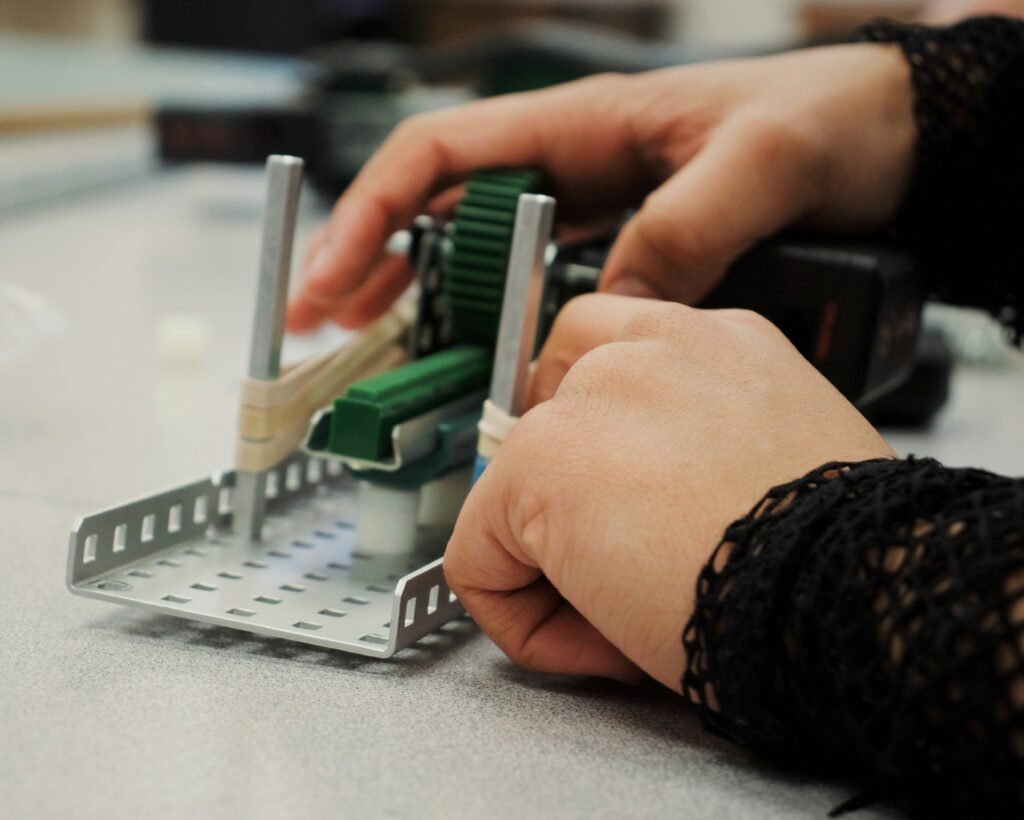
As Levin details, Cam’s story is an important one with struggles within it faced by many young women and girls in the coding and engineering field. Her book breaks through the barrier of gender-based discrimination in the coding field as it guides these women and girls through being an imposter and the struggles they may face because of it. According to Girls Who Code, the number of women in computer science is on a decline. In 1994, 37% of computer scientists were women. In 2022, only 22%. In today’s ever-evolving technology world, Levin’s book is a necessity in order to make sure women remain a constant presence, and aren’t discouraged and instead fight against imposter syndrome.


Cozy Vibes at Just Book-ish’s Local Comics Reading Roundabout