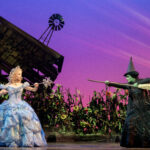
Broadway in Boston’s Wicked: A Bewitching Tale For All Ages

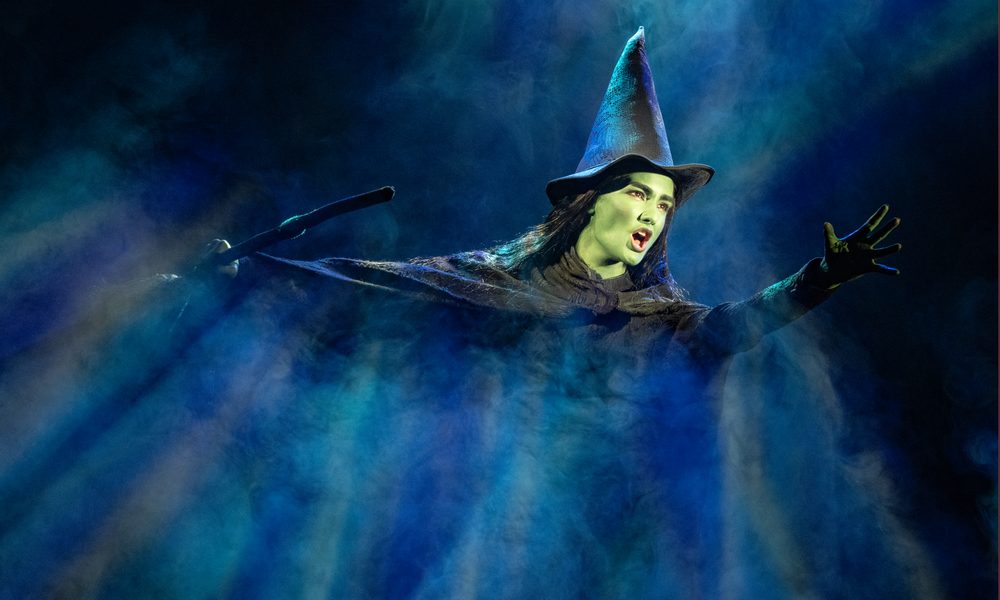
Sparkling sorcery, a yellow brick road, and an unlikely, touching friendship are just a few of the symbols that stuck with me during my experience of Wicked, the Broadway musical. Due to its recent movie adaptation with stars Ariana Grande and Cynthia Erivo, Wicked has also become a sensation in the film realm and pop culture. As I have not watched either adaptation fully yet, nor viewed the Broadway musical before, attending Broadway in Boston’s performance allowed me to gain a better understanding of what Wicked was about, and for a lack of better words, answer: “What’s all the hype?”
After just the opening piece, “No One Mourns the Wicked,” I was blown away, and in my opinion, Wicked deserves all the attention. Set to occur before Dorothy arrives in Oz, Wicked explores the backstory of characters Elphaba (Aline Mayagoitia) and Glinda (Claudia Bennett). The two are introduced as incoming students–and later roommates–at Shiz University. Although both girls establish the fact they clash in everything from personality to morality, they soon form a bond that becomes crucial in saving the future of Oz.
Defying Gravity? Defying Design!
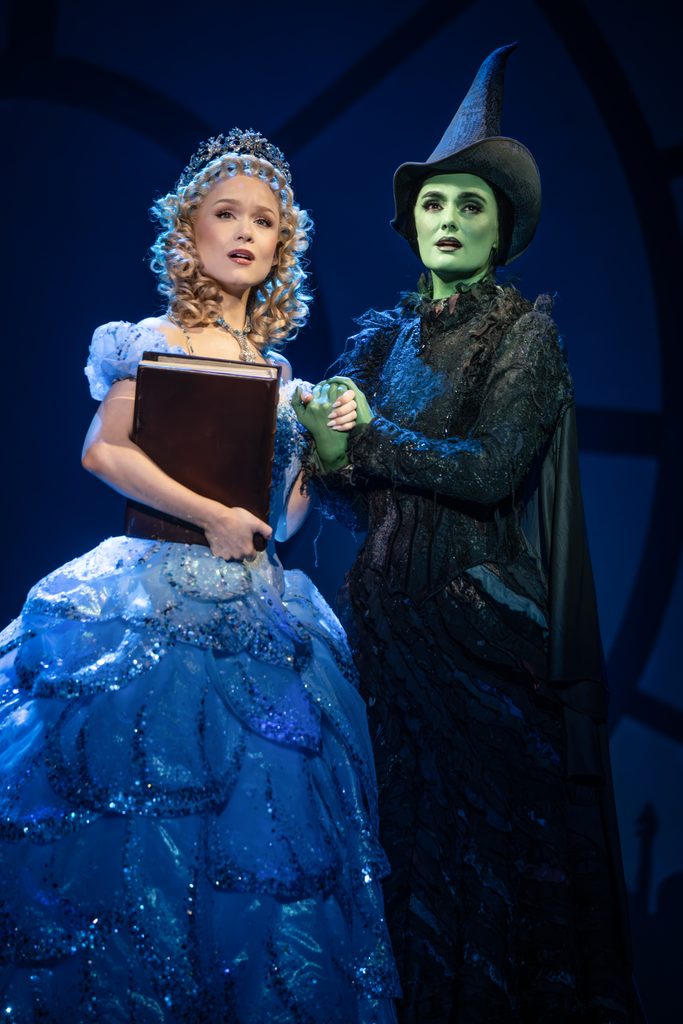
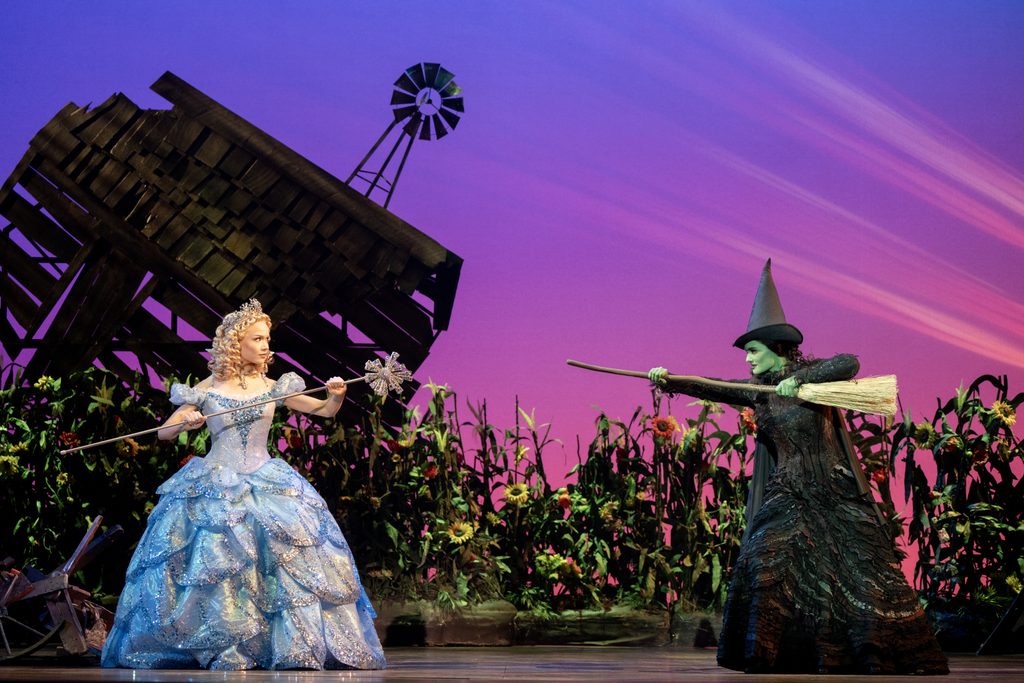
The first thing I must comment upon was this musical’s stunning costume design. While Glinda’s opening song, “No One Mourns the Wicked” already left me in awe, what I remember eyeing first was her gorgeous, periwinkle dress. With the skirt of the dress pleated in layers, almost like flower petals, Glinda *literally glistened!* under the stage lights. I also appreciated how the play used costuming to symbolize character growth, as Glinda did not wear this dress again until much later in the show, when appointed as “Glinda the Good.” I would be remiss without mentioning Elphaba’s wardrobe too, as I watched the bulky lines and muddled colors of her school uniform evolve into the matured, edgier details of her black, textured gown as the “Wicked Witch.” The contrast between Glinda and Elphaba’s wardrobe changes throughout the show, also helped me as a first time viewer grasp the direction in which their characters were headed. While Elphaba’s change in costuming reflected her growing confidence, it also meant her acceptance of the persona others set for her: an outcast that’d only cause trouble. On the other hand, while the consistently polished costuming of Glinda reflected her charm and effervescence, the growing frilliness of it all also implied how stifling these social pressures became for Glinda and her public image.
“La-la…la-la”: No wonder the music’s so popular!
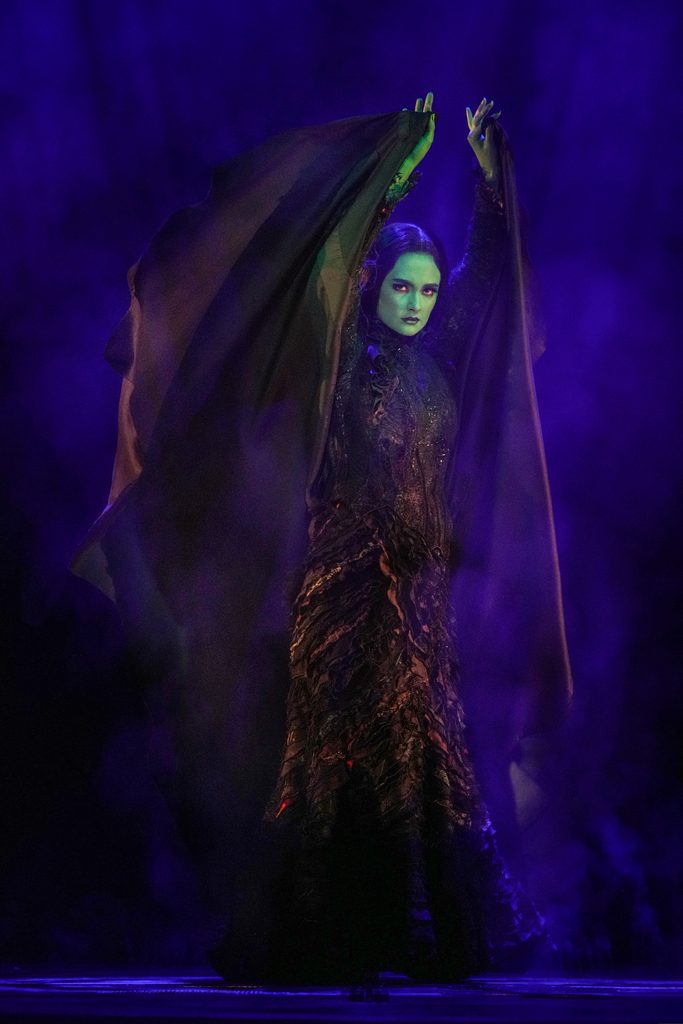
While I had heard some of the musical’s tracks from clips of 2024’s Wicked adaptation online, listening to the playlist live was an unforgettable experience. I distinctly remember feeling chills several times during Mayagoitia’s rendition of “No Good Deed.” Not only were her vocals incredible, but so was the raw emotion embedded into each verse, particularly as Elphaba pleaded for Fiyero (Ethan Kirschbaum) not to die. Mixed in with a torment of chanting, this piece became my favorite for the message it sent: Elphaba was not the twisted and evil instigator that the rest of Oz thought she was. Instead, she was simply a young woman looking for a way to save the ones she loved, whatever the cost. Another track that resonated with me was Glinda and Elphaba’s “For Good.” While this iconic melody felt bittersweet, for it being before the two parted ways, it acknowledged how far Glinda and Elphaba came to understand each other, and how both still found comfort in each other’s presence.
The Story of Oz: Wicked’s Plot
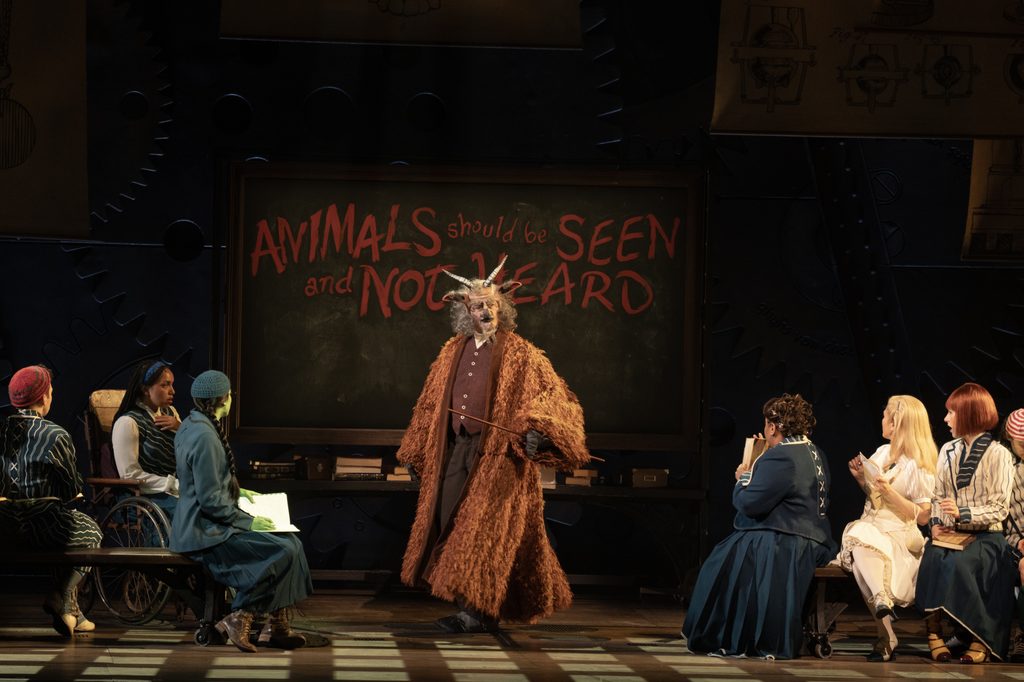
Before going into the show, I initially thought Wicked’s storyline only focused upon the course of Glinda and Elphaba’s friendship. Thus, I was surprised when Act 1 introduced the growing issues of suppression and censorship across Oz, especially against the talking animals like the character “Doctor Dilamond”(Drew McVety), a sentient goat that taught Glinda and Elphaba. In retrospect, this part of Wicked’s plot made me realize how Oz’s hostile government system shared striking similarities with our current political climate. Just as the talking animals were targeted, oppressed, and silenced in Oz, so are the voices of many marginalized communities today. While the rest of Wicked’s parts, such as the love triangle among Glinda, Elphaba, and Fiyero, and the story of Nessarose (Cristina Sastre), Elphaba’s sister, played important roles, I feel as though this chapter of Wicked should be highlighted more, for it serves as a cultural allegory, and a reminder of what can happen when power goes unchecked and into the wrong hands.
Finale: I Have Been Changed (For The Better)
Despite this musical lasting for over two hours, I found myself wishing Glinda and Elphaba would burst out in song again, even after the velvet curtains fell and the overhead chandeliers awoke. While my feet automatically moved to join the dissipating audience, now a blur of pink and green garb, the rest of my body felt slower, still starstruck and processing everything about the show. I entered this experience knowing just a few verses of “Defying Gravity,” but I left with a clearer perspective of Wicked’s nuance — specifically how it reveals the consequences of hierarchy and discrimination. Not surprisingly, the peppy tune of “What Is This Feeling?” became stuck in my head. While this musical’s length can seem daunting to sit through, especially for those fairly new to musical theatre, I believe it’s worth it. Watching Wicked was like visiting an art or science museum for the first time, each element evoking captivating visuals with an even deeper story, leaving you spellbound and curious to learn more.


Other Articles
REVIEW: Wicked Is A Fantastical & Thrillifying Ride