

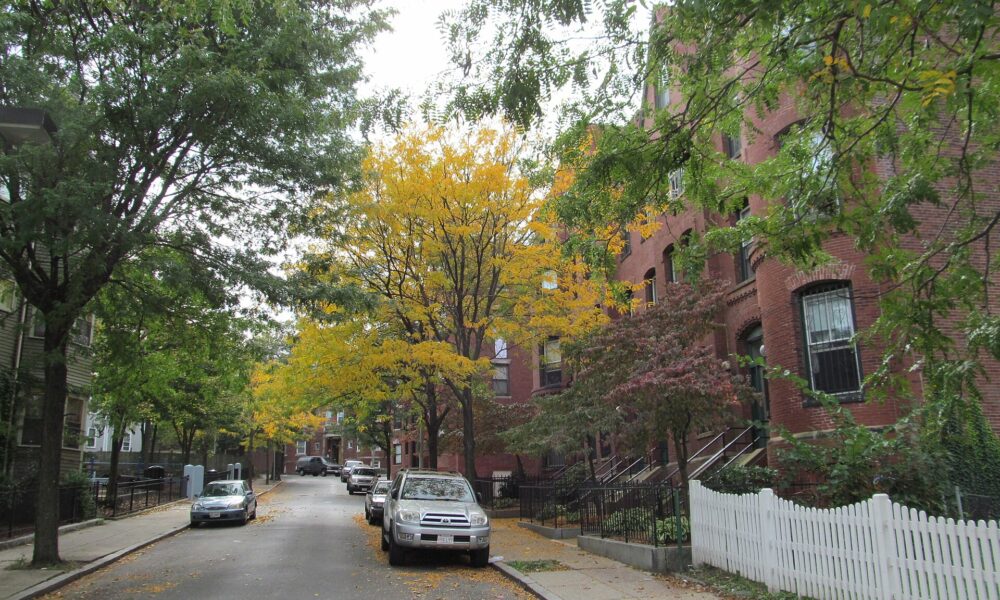
Many families in Boston are being forced to leave their homes and relocate to different neighborhoods, because the cost of living has increased beyond proportion.
What is causing this and why is it happening? Gentrification is the “process in which a poor area (as of a city) experiences an influx of middle-class or wealthy people who renovate and rebuild homes and businesses and which often results in an increase in property values and the displacement of earlier, usually poorer residents,” according to the Merriam Webster. What this means is wealthier people come into poorer communities and start building homes to reside in, making the poorer residents who used to live there move somewhere else because the community increased in value, so the cost of living there is no longer attainable. In Boston however, gentrification happens more in communities where there is a broader ethnic diversity, like Jamaica Plain, Dorchester, Chinatown, Hyde Park, and Roxbury among many others. Since 1990, home values in the gentrified areas mentioned grew 47 percent, rents rose by 39 percent, and incomes increased by 29 percent. Because gentrification occurs in neighborhoods with a population of mostly people of color, this has become a form of systemic racism, with the city of Boston constantly displacing families of low income and of color to replace them with wealthier residents. As developers and real estate investors buy property, rents and property taxes skyrocket, leaving families of color and low income unable to pay to live in communities they’ve known all their lives. The culture from these families and communities are also displaced, leaving with the families as they go.
Needless to say, the benefactors of gentrification are not the families who are moved. It is the already-wealthy property owners, real estate investors, and the city government. Property owners see a massive increase in the wealth of their household as the property values around them soar. Real estate investors make substantial profit buying and selling property whose value has increased dramatically. They can buy existing buildings for a cheap price and sell it way overpriced, which raises the rents for people living and working in that space. Gentrification can generate extra money that the city can put toward improving public services, school funding, road repair, and an increase in police presence in neighborhoods, but this only happens in the neighborhoods that have begun to have wealthier residents. Have you ever wondered why some neighborhoods in Boston are more cared for and clean than others? This is why. Instead of using the extra money for neighborhoods where low income residents are, the city continues to use the money exclusively for neighborhoods that are already gentrified, improving one neighborhood over the other. For example, Roxbury in 2010 was considered the “projects” or the “ghetto.” However, nowadays after all the construction and new buildings were leased, the population of Black/African American residents has changed from 55.6% in 2010 to 41.1% in 2025. This demonstrates the shift to a majority white residents in neighborhoods that have been fixed up.
From a personal perspective, my family and I have relocated so many times in Boston, either due to real estate investors buying property or unhealthy living conditions. Each time we had to move, I had to leave a community that I had gotten to know really well, surrounded by people that were a part of my same ethnicity or culture. This is the same story for many families in Boston, which is why there needs to be laws or procedures put in place to fix this issue. Such procedures could include prohibiting large scale luxury development in middle-low income neighborhoods, and creating a stabilization voucher for longtime residents. By prohibiting large scale luxury developments in low-income neighborhoods, prices around the houses do not go up, and families can still afford to pay their rents and not have to relocate. Creating a stabilization voucher for longtime residents helps keep their housing costs the same even as gentrification is taking place to the community around them. This is groundbreaking, especially for families of low-income who have no means to move anywhere else. If the government and city of Boston implemented these procedures, many families like mine would not have to face the disappointment of having to leave their home and comfort because of a situation that’s out of their hands.